
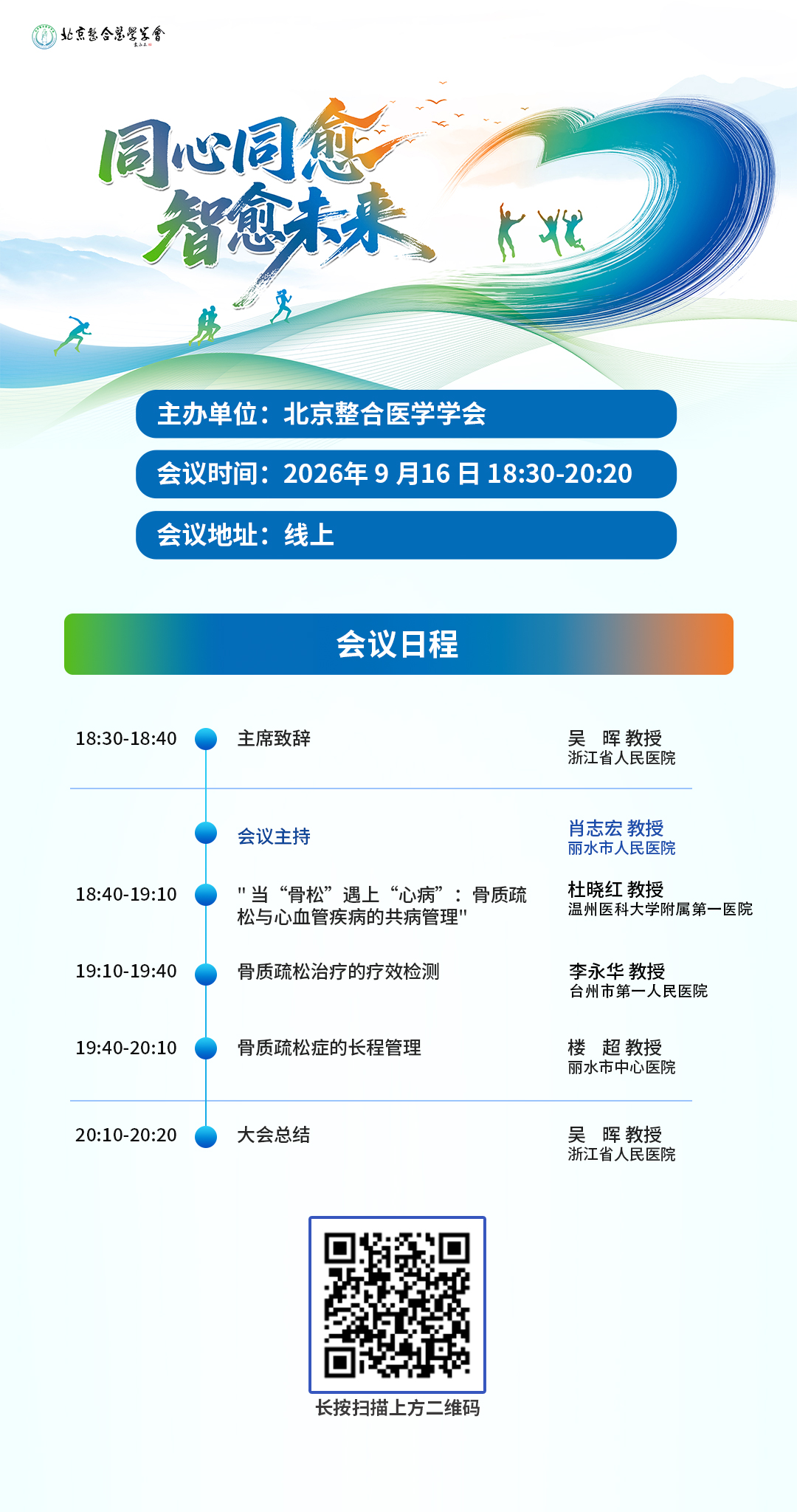
学术直播预告|同心同愈,智愈未来
由北京整合医学学会主办线上学术会议即将开播!
会议时间:2026 年 9 月 15 日 18:30‑20:30
线上相聚,聚焦脊柱骨质疏松性骨折诊治、骨质疏松药物序贯策略及地舒单抗停药反弹应对探讨。
本次会议由刘斌教授担任主席,特邀杨迪、黄乐怡、刘迅等多位临床专家,围绕脊柱骨质疏松性骨折的诊治、骨质疏松药物治疗序贯策略、地舒单抗停药反弹策略展开交流,共同探讨骨质疏松诊疗实践要点。
又一个WordPress站点
学术直播预告|同心同愈,智愈未来
由北京整合医学学会主办线上学术会议即将开播!
会议时间:2026 年 9 月 15 日 18:30‑20:30
线上相聚,聚焦脊柱骨质疏松性骨折诊治、骨质疏松药物序贯策略及地舒单抗停药反弹应对探讨。
本次会议由刘斌教授担任主席,特邀杨迪、黄乐怡、刘迅等多位临床专家,围绕脊柱骨质疏松性骨折的诊治、骨质疏松药物治疗序贯策略、地舒单抗停药反弹策略展开交流,共同探讨骨质疏松诊疗实践要点。
北京2026年9月14日 /美通社/ — 2026年9月14日,卫材(中国)药业有限公司(以下简称"卫材药业")与国药控股就弥可保®针剂推广合作在上海举办签约仪式。卫材中国董事长冯艳辉、总裁周洋,国药控股党委副书记、总裁连万勇,副总裁、总法律顾问、首席合规官胡立刚等双方领导出席签约仪式,共同见证弥可保®针剂推广合作项目重磅启航。
此次签约是双方深化战略互信、拓展合作广度的重要里程碑,标志着双方战略合作迈入全新阶段。未来,双方将依托各自资源禀赋与核心优势,在产品全生命周期内开展多层次、多维度的深度协同,共同致力于为患者提供更高效、更可及的医疗解决方案。
冯艳辉在致辞中表示,弥可保®针剂在中国上市以来,已沉淀丰富的临床实践经验和患者人群。本次卫材药业与国药控股在弥可保®针剂项目上达成合作,开创了双方产品终端推广合作的先河,卫材药业也深感荣幸。期待双方以本次合作为契机,发挥强强联合优势,在传统医疗、创新项目、患者管理、互联网医疗健康等领域多层次开展深度合作,持续提升双方在医药领域的服务价值,合力赋能行业高质量发展,共同造福更多患者和家属。
连万勇在致辞中表示,卫材药业作为国药控股核心战略供应商,双方有着坚实的合作基础。此次弥可保®针剂推广合作项目是国药控股首次向卫材药业提供产品终端推广服务,不仅有助于进一步夯实双方战略合作关系、充分展现国药控股全供应链综合服务能力,也为打造优质合作开局、后续拓展多维度产品合作奠定了坚实基础。国药控股高度重视与卫材药业的战略合作,未来将持续发挥供应链服务与市场营销优势,依托全国一体化运营管理体系,为卫材药业提供覆盖产品全生命周期的综合服务。双方将秉持合规经营理念,共同探索医药产业高质量发展路径,助力更多优质药品惠及广大患者。
卫材中国总裁周洋先生与国药控股副总裁胡立刚先生分别代表双方企业,对本次合作的达成给予高度认可,并对项目后续深耕发展寄予殷切厚望。在现场嘉宾的共同见证下,双方正式签署弥可保®针剂推广合作协议。
此次弥可保®针剂推广合作项目的落地,是双方从供应链合作向终端推广服务延伸的关键一步,也是医药产业链上下游协同创新的有益实践。未来,卫材药业与国药控股将以此次合作为契机,持续拓展合作边界、提升协同效能,共同谱写医药产业高质量发展新篇章,让更多优质药品精准触达、惠及广大患者。
消息来源:卫材(中国)药业有限公司
丹麦巴格斯韦德2026年9月15日 /美通社/ — 诺和诺德将于今日开启全新发展篇章,以"Lasting Health Starts Now"为核心理念,正式启动品牌焕新,并启用统一品牌名称"诺和"(Novo)。同时,公司还将发布全新的企业文化体系"诺和之道"(The Novo Way),推动公司以更专注、更快速、更有影响力的方式发展。品牌焕新与"诺和之道"相辅相成,将支持公司实现业务目标,并朝着为更多人创造更健康生活这一雄心不断迈进。
诺和全球总裁兼首席执行官杜麦克(Mike Doustdar)表示:"人始终是诺和科学创新的核心。通过将创新带入肥胖症和糖尿病等影响数百万人生活的疾病领域,我们推动了这些重要疾病健康领域的变革。然而,未满足的医疗需求依然十分巨大,同时,人们对医疗健康服务的期待也在不断变化。医疗健康服务需要更加以患者为中心,更契合实际需求,也更容易融入日常生活。品牌与企业文化具有重要战略意义,将帮助我们提升运营和竞争能力,但我们存在的意义始终不变——我们始终坚守改变患者生命的初心,并踌躇满志,帮助更多人从此刻开始迈向健康未来。"
品牌焕新
"Lasting Health Starts Now"是此次品牌焕新的核心理念。它传递着这样一种信念:持久健康始于当下,而非未来某天,并通过每天可见、可感的进步逐步实现。此次品牌焕新将为公司打造鲜明、统一且更易识别的品牌表达,强化我们与全球各地的患者、合作伙伴及其他利益相关方的联系。今后,"诺和"将作为公司日常对外沟通和运营中使用的名称,而诺和诺德公司(Novo Nordisk A/S)仍将继续作为公司的全球法定名称。此次更新后的视觉形象保留了深植于诺和历史传承之中的阿匹斯神牛标识(Apis bull logo),同时赋予品牌更现代、更面向未来发展的视觉表达。
此次品牌焕新旨在打造更具记忆点、更契合当代健康生活方式的品牌形象。此外,品牌焕新也彰显了公司致力于让突破性科学创新更加贴近人们日常生活的雄心。随着诺和以更加多元的方式触及更多人群,公司将持续提升品牌知名度,并持续赢得更多认同与信任。
企业文化
此次发布的"诺和之道"(The Novo Way)是一套全新的企业文化原则,将成为公司企业文化的重要基石。"诺和之道"传承了一个多世纪以来塑造诺和特色的核心优势,包括突破性科学创新、深厚专业积淀、以人为本的理念,以及对患者安全始终如一的坚定承诺;同时,也明确了公司在节奏更快、竞争更加激烈、且消费者驱动趋势日益显著的市场环境中,实现持续创新和引领发展所需的行为方式与工作方法。
"诺和之道"围绕四项核心原则展开:
客户至上(Customer Obsession):我们所做的一切都以消费者和患者为中心,以此推动创新
竞争进取(Competitiveness):我们不断追求更高绩效,为所有利益相关方创造更大价值
清晰聚焦(Clarity):我们以清晰的重点、简单高效的工作方式和果断决策提升专注度与行动速度
关爱与诚信(Care & Integrity):我们关爱员工、相互尊重,在患者安全与道德方面从不妥协
诺和人员、组织和企业事务执行副总裁Tania Sabroe表示:"品牌与企业文化相辅相成。企业文化决定了我们如何实现战略目标、如何开展工作;品牌则影响人们如何看待公司的产品和服务,以及公司在全球范围内的整体形象。升级后的企业文化将帮助我们更加专注、以更快的速度前行,而品牌焕新则确保我们在产品、合作伙伴关系、市场传播以及利益相关方互动等各个方面,更好地回应需求并彰显独特价值。二者协同发力,将进一步提升公司的竞争优势,并强化我们作为值得信赖的医疗健康合作伙伴的角色。"
消息来源:诺和诺德
来源:HBC医药咨询
作者:根据2026年8月思齐圈MMC年会HBC工作坊讲者内容整理
2026年8月,上海。在思齐圈第11届医学市场年会的HBC品牌生态数智赢销工作坊上,一场关于“医药营销人跃升法则”的讨论,将视角从“如何做营销”拉向了更本质的命题——当人工智能成为新生产力,创新药商业化的逻辑到底发生了什么变化?
一、逻辑变了:创新不再自动等于价值实现
粤港澳大湾区医药创新联合会发起人、前RDPAC执行总裁康韦女士,在其《从产品营销到创新价值实现》的分享中开宗明义:今天决定一个创新产品能否成功的,已经远远不只是市场营销做得好不好。
她指出,创新产品商业化的成功逻辑,已经发生了四个根本性变化:
1.产品变了:从普药走向特药、基因治疗等精准疗法,高价值、系统化,仅靠大规模推广难以奏效。
2.决策者变了:处方不再由医生单方面决定,而是受到医院、支付方、监管、患者等多方影响。
3.支付逻辑变了:市场不再只看“有没有效”,更追问“比现有方案好多少,值不值得付”。
4.竞争格局变了:全球化的医药创新竞争,要求企业在更早阶段就建立完整的价值证据。
因此,一个产品有好的科学机制、有积极的临床结果、获得监管批准,都不自动等于创新价值真正实现。“获批”只是节点,而不是终点。从科学价值、临床价值,到监管认可、准入支付、患者获益和商业回报,任何一个环节断裂,创新都无法真正惠及患者。
真正的转型,不是“用了AI”
康韦引用了辉瑞董事长兼首席执行官艾伯乐(Albert Bourla)的判断:“采用人工智能是一回事,真正实现转型则完全是另一回事。”真正的转型,不是部署模型、采购工具,而是技术有没有开始改变信息如何形成洞察、不同职能如何协同,以及组织最终如何做出决策。
在她看来,市场营销的角色正在拓展:它需要更好地把患者和市场洞察带入价值讨论,连接患者需求、临床证据、准入与市场,并与研发、医学、注册、准入等不同职能共同促进价值实现。市场营销不是创新价值实现的“所有者”,但它可以成为创新价值的重要连接者。
二、场景铺开:AI正进入真实业务,而不只是生成内容
北京安吉迈医疗科技有限公司CEO刘焰女士,拥有30多年医药商业化经验。她在分享《医药营销中AI应用场景》时,勾勒出了一张AI在医药营销中的全景图。
她认为,AI的应用贯穿从研发到商业化的整个价值链:
辅助决策场景:在商业评估中,AI可以帮助快速生成竞争分析报告,覆盖临床试验、上市时间等多维信息,极大提升效率。之前工作的公司的AI特战队就曾用此方法辅助商业评估的初评。
信息搜集与洞察场景:AI可帮助医生进行文献检索、摘要和科研设计,也能通过公开数据构建医生画像,让每一次拜访都更有准备。
内容生成与传播场景:从幻灯片、海报、视频脚本到数字人科普,AI已成为市场部内容生产的加速器。
客户触达与互动场景:AI数字人可以进行不知疲倦的“角色扮演”陪练;专病智能体(AI医生助手)能主动随访患者,记录院外数据,成为医生管理患者的有力延伸。
刘焰特别强调了一个重要前提:AI的应用始终要建立在品牌策略和卓越营销的思想体系之上。 它不是脱离业务战略的独立工具。
三、人机协同:真正稀缺的是判断,而非信息
在这场讨论中,一个清晰的共识浮现出来:AI越强大,人的经验与判断反而越重要。
康韦指出,AI时代,真正稀缺的也许不再是信息,而是判断;不再只是执行效率,而是把不同信息连接成价值、把不同职能连接成行动的能力。
刘焰同样认为,市场营销工作依然不可或缺。面对复杂的客户群体和快速变化的市场,单纯依赖AI的信息推送无法满足需求。能够在行业中立足的人才,需具备“人+智能体”的复合型能力:既要拥有传统营销的沉淀,又要积极拥抱AI。而驾驭AI的核心能力,在于“会提问”和“会识别”——基于思考去提问题,并能识别和纠正AI可能产生的“幻觉”。
四、专家经验的结构化迁移:WINUP™ 赢啊 赢啊 的探索
在讨论AI如何赋能医药营销时,一个关键问题浮出水面:AI到底适合解决哪类问题? 工作坊上,AI技术转化专家崔跃从技术角度给出了一个清晰的分类框架。
她将企业引入AI的场景分为三大类别:第一类是“规则驱动”型,这类工作具有明确的SOP流程和重复性特征,适合用AI Agent实现自动化;第二类是“数据驱动”型,依托大量结构化的历史数据,可以训练垂直领域模型进行预测和分析;而第三类,则是“经验驱动”的复杂专家决策——以年度商业计划书(BP)撰写、销售结果归因分析为代表。这类工作具有高度的不确定性和复杂性,既无法用简单的“If-Then”规则穷举,也因缺乏完整、结构化的高权重参数而难以在短期内训练出有效的AI模型。它极度依赖资深专家的“直觉”和隐性经验,而这恰恰是新手最缺乏的。
HBC医药咨询创始人徐虹女士,近20年来一直专注于将卓越的营销实践经验沉淀为方法论。她在工作坊上发布并演示的WINUP™ 赢啊 赢啊(赢啊)营销决策智能链工具,正是对这一“经验驱动”型难题的探索与回应。
【该工具针对BP撰写中长期存在的三大致命伤,提供了系统性的解法:
针对“逻辑链条断裂”——策略与活动环节脱节、因果模糊。WINUP™ 赢啊 赢啊通过结构化的工具闭环,强制衔接战略与行动,从目标设定到策略制定到资源分配,实现逻辑链条的自动咬合,让每一场活动都“师出有名”。
针对“洞察浮于表面”——BP仅描述现象,未触及客户行为的本质与根因。WINUP™ 赢啊 赢啊内置根因洞察法,通过动因洞察和驱阻分析,引导使用者层层穿透,找到客户观念和行为问题的真正根源,让策略不再建在沙丘之上。
针对“缺乏ROI衡量”——投入与产出无法量化挂钩,资源分配缺乏依据。WINUP™ 赢啊 赢啊的内置量化模型可自动测算不同机会组合的投入产出比,让每一笔投入的商业价值可预估、可衡量、可追溯。
通过这三重设计,WINUP™ 赢啊 赢啊将BP从模糊的“愿景描述”,升级为可拆解、可量化、可执行的“商业作战地图”。】
它的核心理念是“认知脚手架”——让使用者“不用先学、直接跟着做”,在完成3-5个产品的策略推演后,潜移默化地内化专家的思维模式。
结语:组织升级,是通向未来的路
从康韦的“价值连接者”,到刘焰的“人机复合体”,再到徐虹的“经验迁移”——三位讲者从不同维度描绘了医药营销人的未来图景。
这其实是一场围绕“创新价值实现”的组织升级。它不只是一次方法论的更新,更要求组织在价值定义上更早协同,在跨职能协作上更紧密,在决策上更快。而AI,正是这场升级中最有力的加速器。
【预告】如果说本文回答了“为什么需要升级”和“升级的方向是什么”,那么下一篇文章将聚焦“具体怎么落地”——深入拆解WINUP™ 赢啊工具如何逐一破解BP的三大致命伤,以及它在实际工作场景中的操作流程与使用价值。
希望演示体验WINUP™赢啊工具, 请扫码联系我们↓
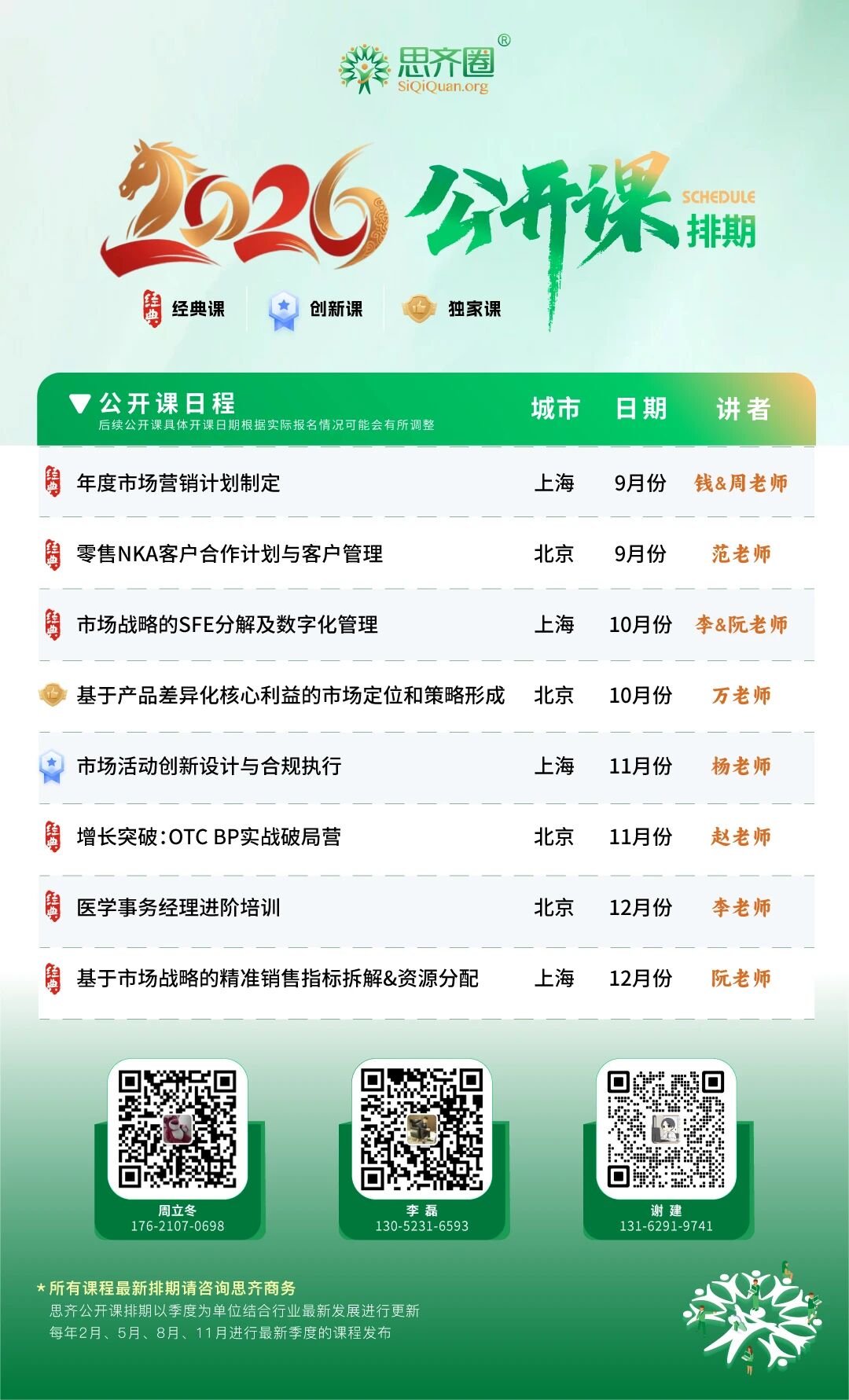
全新升级,思齐圈公开课
下半年,精彩预告!
来源:HBC医药咨询
作者:根据2026年8月思齐圈MMC年会HBC工作坊演示与讲解整理
每年BP季,是很多产品经理最痛苦的时刻。面对海量信息无从下手、洞察浮于表面、策略与活动逻辑断裂、最终难以衡量投入产出——这四大硬伤,几乎成了行业“顽疾”。
在2026年思齐圈MMC年会的HBC工作坊上,WINUP™赢啊 营销决策智能链工具的发布与演示,为这一困境提供了全新的解题思路:将专家的“脑”,变成你手中的“路”。
痛点一:信息过载,理不出有价值的信息
传统困境: BP还没开始写,光是对着几十页的图表和数据,就已经“宕机”了。
WINUP™赢啊 解法:结构化输入,拒绝冗余
WINUP™赢啊 的第一步是建立“品牌档案”。它并非一个开放式的文档,而是一个高度结构化的信息收集器。
· 集成六大类关键信息:包括产品基本信息、品牌核心策略(市场定义、差异化定位)、信任支撑的证据、品牌认定的疾病诊疗观念、疾病诊疗现状洞察,以及公司力量概述。
· 只收集“策略有用”的信息:徐虹老师在分享中指出,大量的BP中可能80%的分析图表是没有结论的。WINUP™赢啊 通过专家的视角,筛选出对策略制定真正关键的六大类信息,让用户从源头上避免信息过载。
痛点二:洞察肤浅,找不到客户行为的根因
传统困境: 分析了一堆数据,只知道“市场份额下降了”,却不知道“为什么下降”,更不知道“该改变客户的哪个行为”。
WINUP™赢啊 解法:根因洞察题库,直击灵魂的“选择题”
这是WINUP™赢啊 最核心的设计之一。当用户完成品牌档案并自动生成患者诊疗路径后,系统会针对每一个被标记的“业务机会”(黄金腰带),自动生成一系列动因洞察问题。
· 问题源于专家思维树:这些问题并非随机,而是沿着“需求知晓→需求认知→价值相信→价值体验→行为改变→行为升级”等专家根因思维树的维度展开。
· 从“问答题”变“选择题”:用户无需自己揣摩该“洞察什么”,只需要根据自己对市场的了解,在系统给出的选项中进行判断。例如,系统会问:“客户不进行病毒载量检测,是因为A. 不知道指南要求?B. 不认为病程与病毒载量有关?还是C. 检测设备不具备?”这种设计极大地降低了洞察的门槛,帮助用户穿透表象,直达根因。
痛点三:逻辑断裂,策略和活动是两张皮
传统困境: 分析是分析,策略是策略,活动是活动,三者之间缺乏令人信服的逻辑关联,BP经不起“So What?”的追问。
WINUP™赢啊 解法:强逻辑链条,环环相扣的闭环
“分析完却不知道怎么转化成策略”——这常常是“眼会手不会”的关键卡点。WINUP™赢啊 通过导航化的流程设计,强制构建了一条完整的逻辑链:
1. 患者路径 → 机会识别:从路径中自动识别出对品牌最有利的“业务机会”(黄金腰带)。
2. 机会 → 根因洞察:针对每个机会,用动因题库分析客户“为什么没这么做”。
3. 根因 → 驱阻分析:将洞察发现转化为驱动因素和阻碍因素(驱阻)。
4. 驱阻 → 策略与战术:针对关键的驱阻因素,系统引导用户制定策略,并自动匹配战术选项。
5. 战术 → ROI测算:将战术选择与机会组合的投入产出自动挂钩。
每一步的输出,都是下一步的输入。这就确保了从市场分析到最终战术执行,有一条清晰、可追溯的论证链,真正做到了“师出有名”。
痛点四:没有ROI,无法衡量营销活动的价值
传统困境: BP沦为了活动的罗列,投入了多少资源,预期能换回多少生意,一笔糊涂账。
WINUP™赢啊 解法:内置量化模型,自动测算机会组合ROI
在完成洞察和策略选择后,系统会引导用户进行“机会组合”的决策。
· 量化患者流:在患者诊疗路径中,用户可填入各节点的患者数量或比例,系统自动换算。
· 测算投入产出:针对选定的机会组合,系统会要求用户预估行为转化率和患者份额,并自动计算该组合的投入产出比(ROI)。
· 辅助决策排序:最终,系统会为不同的机会组合进行量化排序,帮助决策者清晰地看到哪组机会“性价比”最高,应该优先投入。
结语:走十遍,你就是专家
在演示中,无论是半自动生成的患者路径、智能匹配的洞察题库,还是最终的投资决策排序,都让现场参与者直观感受到了“专家大脑”带来的效率与品质。
WINUP™赢啊 的价值不止于“完成BP”,更在于能力的迁移与内化。正如其设计所期望的:当你用它完成3-5个品牌的策略推演后,那条曾经只存在于专家脑海中的思维路径,已经悄然印在了你的大脑里。“走十遍,你就是专家。”
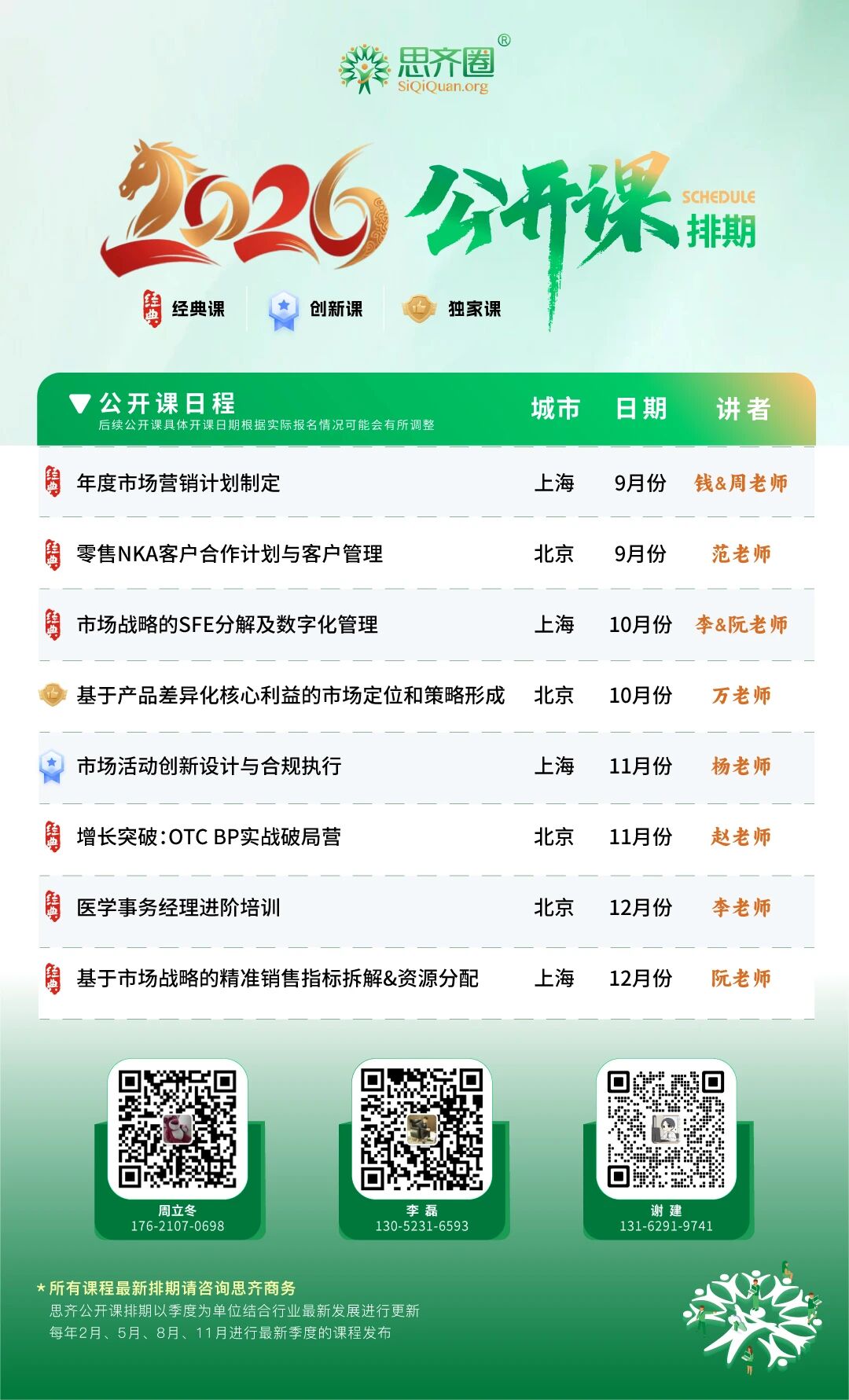
全新升级,思齐圈公开课
下半年,精彩预告!
上海2026年9月11日 /美通社/ — 近日,恒瑞医药收到国家药品监督管理局的通知,批准公司自主研发的1类创新药恒曲®(海曲泊帕乙醇胺片)新增适应症:用于实体瘤化疗为主的抗肿瘤治疗所致血小板减少症(CTIT)成人患者。该产品由此成为CTIT领域全球首个获批的血小板生成素受体激动剂(TPO-RA),且口服给药方式提升患者治疗便利性,将为抗肿瘤治疗以及推动CTIT规范化全程管理提供有力支持。
随着抗肿瘤治疗不断发展,化疗、抗体偶联药物等方案在延长患者生存的同时,也使血液学毒性管理面临更大挑战。CTIT是抗肿瘤治疗常见的不良反应,不仅会增加皮肤黏膜出血乃至严重出血风险,还可能导致抗肿瘤药物减量、治疗延迟或中断,影响治疗剂量强度和患者获益,并增加血小板输注、住院监测及医疗资源负担。部分传统升血小板治疗依赖注射给药,患者需反复往返医院,也给CTIT院内外衔接和全程管理带来不便。因此,临床亟需兼顾疗效与用药便捷性的治疗选择,助力抗肿瘤治疗按计划推进。
海曲泊帕是中国首个自主研发的非肽类口服TPO-RA,通过激活TPO-R介导的相关信号通路,促进巨核细胞增殖、分化和血小板生成。其Ⅱ期注册研究显示,海曲泊帕组治疗应答率为60.7%,显著优于安慰剂组的12.9%。为后续Ⅲ期研究和此次获批提供了早期随机对照证据。
此次获批主要基于由哈尔滨血液病肿瘤研究所马军教授和中国药科大学附属南京天印山医院秦叔逵教授共同牵头的多中心、随机、双盲、安慰剂对照Ⅲ期SHR8735-301研究。研究结果显示,海曲泊帕连续给药组治疗应答率为75.7%,显著高于对照组的39.4%;连续给药组62.9%的患者能够使用与入组前相同的方案完成两个连续治疗周期,未因血小板减少调整方案或接受援救治疗,并在规定时间维持目标血小板水平,对照组这一比例为5.6%。安全性方面,三组不良事件发生率相近,多数为1至2级。
SHR8735-301共同主要研究者、哈尔滨血液病肿瘤研究所马军教授表示:"从CIT(化疗所致血小板减少症)到CTIT的概念演进,反映了临床关注点正在从一次性纠正血小板计数,延伸到整个抗肿瘤治疗过程。SHR8735-301研究显示,连续使用海曲泊帕不仅提高了方案定义的治疗应答率,也显著缩短了下一周期治疗延迟,并帮助更多患者完成两个连续治疗周期。期待此次获批助力我国CTIT管理进一步朝着循证化、标准化和全程化的方向发展。"
SHR8735-301共同主要研究者、中国药科大学附属南京天印山医院秦叔逵教授表示:"从Ⅱ期到Ⅲ期多中心临床试验,海曲泊帕治疗CTIT构建了完整的RCT证据链。两项研究数据相互印证,表明海曲泊帕可为CTIT带来一个全新的治疗方案,有助于保障抗肿瘤治疗的连续顺利进行。我们期待该项适应症的获批,能够进一步提升肿瘤患者在CTIT治疗管理方面的水平,同时为国内国际临床指南的更新提供高级别的循证医学证据,推动临床策略不断优化。"
恒瑞医药总裁、首席运营官冯佶表示:"海曲泊帕作为CTIT领域全球首个获批的TPO-RA,是中国创新药在肿瘤支持治疗领域的重要成果。特别是其口服给药的便捷性,有助于改善患者的治疗体验、保障治疗的连续性。这一突破不仅体现了恒瑞医药以临床价值为导向,关切患者需求的初心与担当,也展现了公司在肿瘤支持治疗领域不断探索、持续努力的决心。未来,恒瑞医药将继续立足临床需求,加快高质量研究成果向临床转化,推动中国创新药更好地服务广大患者。"
目前,海曲泊帕在CTIT领域的循证版图仍在拓展。用于化疗所致血小板减少症患者的全球Ⅲ期随机、双盲研究正在推进,研究设计已在2026年美国临床肿瘤学会年会上公布;2026年《BMC Medicine》发表的乳腺癌CTIT治疗及二级预防研究,也为以抗体偶联药物为主的治疗场景提供了前瞻性探索证据。从中国注册研究到全球多地区验证,从CTIT治疗到二级预防等管理场景,相关证据正在不断丰富。
作为CTIT领域全球首个获批的TPO-RA,海曲泊帕填补了该领域尚无同类药物获批的治疗空白,标志着中国自主创新药在肿瘤支持治疗领域实现重要突破。从促进血小板生成到保障抗肿瘤治疗延续性,再到推动院内外衔接和全程管理,这一创新成果有望推动我国CTIT治疗迈向更加规范、便捷和全程化的新阶段,并为全球肿瘤支持治疗贡献中国方案。
消息来源:恒瑞医药
上海2026年9月11日 /美通社/ — 近日,卫材中国阿尔茨海默病创新治疗药物仑卡奈单抗正式纳入广西贵港、贺州、河池三地惠民保特定药品费用保障方案。
三地惠民保均为当地医保部门指导的普惠型商业补充医疗保险,不限年龄、健康状况与既往病史,面向当地基本医保参保群众开放自愿投保,旨在完善多层次医疗保障体系,减轻重特大疾病患者用药负担。
在"贵港惠民保"中,仑卡奈单抗纳入2026年"贵港惠民保"《特定药品费用的35种用药》,保险金100万元。特药年度起付线2万元(特殊人群7500元);普通人群赔付比例50%,既往症人群20%;特殊人群赔付比例60%,既往症人群30%。该特定自费药品须由三级定点医疗机构专科医生开具处方,且为被保险人当前治疗必需的药品,单次处方剂量不超过1个月。
在"贺惠保"中,仑卡奈单抗纳入2026年"贺惠保"特定药品保障目录(25种),保险金额50万元。年度起付线1.5万元(特殊人员0.8万元);普通人群赔付 50%,特殊人群55%,既往症人群30%,处方需由二级及以上定点医疗机构专科医生开具,单次处方剂量不超过1个月。
在"河池惠民保"中,仑卡奈单抗纳入2026年"河池惠民保"尊享版特定药品保障目录(35种),保险金额100万元。一般参保人年度免赔额1.5万元,赔付比例50%;既往症人群免赔额1.8万元、赔付比例30%;特殊人群年度免赔额1.5万(其中特殊人群既往症1.8万),赔付比例60%。用药需三级定点医疗机构专科医生处方,单次处方不超过1个月,并按要求在惠民保特药平台的特药申请入口提交相关材料且审核通过,在特定药品指定药房取药。
卫材中国始终秉承"hhc"(human health care,关心人类健康)的企业理念,将患者利益和公众健康放在首位,满足其多样化需求,为提升其福祉做出贡献,并积极向 "hhceco"(hhc理念+生态系统)模式演进,不仅通过药品,也通过非药品解决方案为人们做出贡献。仑卡奈单抗自2026年1月1日起纳入国家首批《商业健康保险创新药品目录》。截止目前,该药品已进入全国26个省市惠民保特药保障责任。依托"hhceco"新模式,商业保险准入有效提升创新药可及性与可负担性,与基础医保形成保障互补,切实惠及更多患者和家庭。
消息来源:卫材中国
普鲁苏拜单抗是一款第二代Fc增强型CTLA-4抗体,目前正在新辅助治疗阶段同步推进两项临床适应症,首项适应症为MSS型临床II-III期结肠癌。
普鲁苏拜单抗治疗结肠癌的2期试验将于2026年第四季度初启动患者入组。
本轮融资由RA Capital Management领投,Canaan Partners、Forbion及其他投资者共同参与。
中国上海、美国马萨诸塞州剑桥和荷兰鹿特丹2026年9月9日 /美通社/ — 和铂医药(股票代码:02142.HK),一家专注于免疫性疾病、肿瘤及其他领域创新药研发的全球生物医药公司,今日宣布其合作伙伴Solstice Oncology(以下简称"Solstice")已完成2.25亿美元的A轮融资并正式启动运营。本轮融资由RA Capital Management领投,Canaan Partners、Forbion及其他投资者共同参与。Solstice是一家临床阶段的肿瘤免疫公司,致力于在新辅助治疗阶段更早地干预癌症。
Solstice 正在推进其主要候选药物普鲁苏拜单抗,这是一款具有差异化特性的第二代Fc增强型抗体,靶向细胞毒性T淋巴细胞相关蛋白4(CTLA-4),目前已在两项临床适应症中推进,其中之一为微卫星稳定型(MSS)结肠癌,另一项适应症暂未披露。其一项2期临床研究正在评估普鲁苏拜单抗联合帕博利珠单抗在新辅助治疗中对 MSS 型临床 II-III 期结肠癌的疗效。MSS型是结肠癌中占比最大的亚型,迄今为止该患者群体仍未能从免疫治疗中获益。
普鲁苏拜单抗由和铂医药发现并开发。2026年2月,和铂医药与Solstice Oncology就该药(和铂医药管线代号HBM4003)签订授权协议及股权合作,授权其在大中华区以外享有独家开发和商业化权利,从而加速该项目的全球化开发进程。
和铂医药此前开展的一项2期临床研究显示,普鲁苏拜单抗联合PD-1抑制剂替雷利珠单抗用于经多线治疗、无肝转移的MSS型转移性结直肠癌患者,客观缓解率达30%(7/23例),且应答持久,中位缓解持续时间为8.4个月。同时,普鲁苏拜单抗表现出良好的安全性特征,支持其后期临床开发。上述结果为进一步评估普鲁苏拜单抗联合PD-(L)1抑制剂及在更前线治疗(包括新辅助治疗)中的应用提供了临床依据。
和铂医药创始人、董事长兼首席执行官王劲松博士表示:"我们非常高兴看到Solstice Oncology在顶级投资者的有力支持下成功启动运营,并将普鲁苏拜单抗推进至新辅助治疗领域。作为普鲁苏拜单抗的原创研发者及Solstice的合作伙伴,我们期待支持这一差异化 CTLA-4 抗体的持续开发,并探索其惠及全球患者的潜力。"
Solstice Oncology首席执行官Caroline Loew博士表示:"我们相信,肿瘤治疗最大的机遇在于更早地介入疾病,即在新辅助治疗阶段——此时肿瘤仍然存在,免疫系统相对完好,疾病也尚未形成对治疗的耐药性。通过肿瘤免疫联合疗法对患者进行早期干预,正如我们正在2期临床研究中评估的方案,可使免疫应答发挥全身性作用,从而触及远超原发肿瘤范围的微转移病灶,这正是我们认为提高治愈率和长期生存率的最大机会所在。自今年2月成立以来,我们的团队以这一机遇所要求的速度和严谨态度推进工作,已完成IND申报及获批,并直接推进至2期临床研究,我们预计将于2027年下半年获得该研究的数据。"
消息来源:和铂医药
全球首个*单一固定剂量#长效 RSV 单抗安福畅®(克莱罗韦单抗)在华商业上市
上海2026年9月9日 /美通社/ — 默沙东(默沙东是美国新泽西州罗威市默克公司的公司商号)于近日宣布,全球首个*单一固定剂量#长效 RSV 单抗[1],[2]克莱罗韦单抗注射液已正式在华商业上市,用于即将进入或出生在第一个呼吸道合胞病毒(RSV)流行季的新生儿和婴儿预防 RSV 所致的下呼吸道感染[1],无需测量体重,均使用同一剂量进行注射#[1],为中国宝宝带来助力守护呼吸健康的新选择。
呼吸道合胞病毒是导致婴儿呼吸道感染最常见的病毒,其传染性较强[3],[4]。在RSV流行高峰期,一个感染者平均能够传染给4-5个人[4]。且RSV传播途径多,呼吸道飞沫和密切接触都有可能导致传染[5]。
国际系统综述表明,几乎所有宝宝在2岁前都感染过RSV[6]。一项中国多中心回顾性分析显示,RSV是中国1岁以下婴儿社区获得性肺炎住院的首要病毒[7], a。1岁以下婴儿因免疫系统和气道发育尚不成熟,在感染RSV后更容易发展成重症[8]。一项基于日本健康保险索赔数据库的研究显示,因RSV感染住院的1岁以下婴儿有超过90%是足月出生且无合并症的健康婴儿[9],b。
默沙东全球高级副总裁、默沙东中国总裁唐凯宇表示:"RSV感染所致的疾病威胁婴儿健康。我们很高兴地看到,在全球范围内,克莱罗韦单抗已在多个国家和地区帮助预防新生儿和婴儿因RSV导致的下呼吸道感染[1],[10]-[11][12][13][14][15][16][17][18][19]。随着克莱罗韦单抗在中国境内正式商业上市,我们有机会帮助更多中国宝宝建立RSV守护防线。未来,默沙东将携手合作伙伴,共同提升大众对RSV的疾病认知,并不断提升产品可及性,助力更多婴儿畅快呼吸,健康成长。"
宝宝感染RSV后的症状表现差异很大,可以表现为症状轻微的上呼吸道感染,类似普通感冒,也可表现为严重下呼吸道感染,如毛细支气管炎或肺炎[3],[5]。RSV感染属于自限性疾病,绝大多数宝宝感染后恢复良好且不遗留后遗症[5],但仍有部分宝宝会因RSV感染导致重症进而住院治疗[10]。对部分重症RSV感染的宝宝来说,影响可能不止于呼吸道,还可能在短期内导致神经系统及心血管并发症[20]。一项荷兰的前瞻性队列研究显示,婴儿时期重症RSV感染可能导致肺功能长期受损,日后发生喘息和哮喘的风险增加约3倍[21], b,可能构成长期健康隐患[22]。
重庆医科大学附属儿童医院符州教授表示:"目前临床上尚无针对RSV的特效抗病毒药物[5],以对症支持治疗为主,因此预防就显得尤为重要。除日常的非药物预防措施外,RSV单抗是我国新生儿及婴儿预防RSV所致下呼吸道感染的重要手段[22]。而克莱罗韦单抗在我国的上市将进一步丰富中国宝宝的RSV预防选择,也为完善我国RSV防控体系提供有力支持。"
|
*截至 2026 年 8 月,安福畅®(克莱罗韦单抗)是全球第二个获批的长效 RSV 单抗,但是首个获批的长效 RSV 单抗尼塞韦单抗有两种剂量规格,需要根据体重给药,而安福畅®(克莱罗韦单抗)是全球首个单一固定剂量长效 RSV 单抗。 |
|
#对于新生儿和婴儿:第一个 RSV 流行季,推荐剂量为 105 mg,单次肌肉(IM)注射 0.7mL。对于在 RSV 流行季期间接受体外心肺循环心脏手术的婴儿,建议在婴儿术后病情稳定后尽快追加注射 105 mg 剂量,以保证克莱罗韦单抗足够的血清水平。 |
|
[1] 克莱罗韦单抗注射液中国说明书 |
|
[2] 尼塞韦单抗注射液中国说明书 |
|
[3] 谢正德,等. 中华实用儿科临床杂志. 2022;37(7):481-485. |
|
[4] 国家呼吸医学中心,等. 中华医学杂志. 2026;106(2):108-121. |
|
[5] 中国医药教育协会儿科专业委员会,等. 中华实用儿科临床杂志. 2024;39(10):733-737. |
|
[6] Hu M, et al. Physiol Rev. 2020;100(4):1527-1594. |
|
[7] Feng Q, et al. J Infect. 2025;90(3):106450. |
|
a研究设计:一项来自中国多中心回顾性研究,从"福棠更新病历"(FUTURE)数据库中2016至2022年间的出院病历首页(FSMRs)提取数据,研究识别并分析了来自33家三甲儿童医院的病毒性社区获得性肺炎(VCAP)病例,采用适当的统计方法对流行病学特征、住院天数和住院费用进行了比较分析,旨在调查中国VCAP住院患儿的流行病学特征和负担。 |
|
研究结果显示:在病毒性社区获得性肺炎住院的<1岁患儿中,RSV病例数最多。 |
|
[8] 中华预防医学会. 中华流行病学杂志. 2024;45(10):1327-1338. |
|
[9] Arashiro T, Kramer R, Jin J, Kano M, Wang F, Miyairi I. Inpatient Burden of Respiratory Syncytial Virus Infection and Influenza in Children Younger Than 5 Years in Japan, 2011-2022: A Database Study. Influenza Other Respir Viruses. 2024 Nov;18(11):e70045. |
|
b. 研究设计:一项基于日本健康保险索赔数据库的研究,识别了 2011年至 2022年间确诊为 RSV或流感的门诊或住院的 5岁以下患儿,描述了住院率、住院患者特征、各类住院结局/并发症以及医疗资源使用情况。共识别出 RSV确诊门诊患者 176,911例,流感确诊门诊患者 153,383例, RSV确诊住院患者 90,413例,流感确诊住院患者 11,186例。 |
|
研究结果显示:在 1 岁以下婴儿中>93% 的 RSV 住院发生在足月出生且无任何合并症的健康婴儿中。 |
|
[10] FDA. Novel Drug Approvals for 2025. Available at: https://www.fda.gov/drugs/novel-drug-approvals-fda/novel-drug-approvals2025. Accessed: June 2026. |
|
[11] Venturella F, et al. J Biol Res. 2026. doi: 10.4081/jbr.2026.14042. |
|
[12] Information on drugs and health products authorized by Health Canada. Details for: ENFLONSIA. Available at: https://dhpp.hpfbdgpsa.ca/dhpp/resource/106778. Accessed: June 2026. |
|
[13] Swissmedic Journal 01/2026. Available at: https://www.swissmedic.ch/swissmedic/en/home/suche.html#Clesrovimab. Accessed: June 2026. |
|
[14] Singapore Government Agency Website. Listing of approvals. Available at: https://www.hsa.gov.sg/therapeutic-products/listingof-approvals-and-post-registration-actions/listing-of-approvals. Accessed: June 2026. |
|
[15] Therapeutic Goods Administration (TGA). Enflonsia(clesrovimab). Available at: https://www.tga.gov.au/resources/auspmd/enflonsia-clesrovimab. Accessed: June 2026 |
|
[16] Anvisa aprova novo medicamento para prevenção do virus sincicial respiratório(VSR). Available at: https://www.gov.br/anvisa/ptbr/assuntos/noticias-anvisa/2026/anvisa-aprova-novo-medicamento-para-prevencao-do-virus-sincicial-respiratorio-vsr. Accessed: June 2026. |
|
[17] The Israeli Drug Registry. ENFLONSIA. Available at: https://israeldrugs.health.gov.il/#!/medDetails/181%2070%2038505%2000. Accessed: June 2026. |
|
[18] European Medicines Agency. Enflonsia. Available at: https://www.ema.europa.eu/en/medicines/human/EPAR/enflonsia. Accessed: June 2026 |
|
[19] GOV.UK. Enflonsia(clesrovimab-cfor) approved to prevent RSV in newborns and infants. Available at: https://www.gov.uk/government/news/enflonsia-clesrovimab-cfor-approved-to-prevent-rsv-in-newborns-and-infants. Accessed: June 2026. |
|
[20] 中华医学会儿科学分会临床药理学组,等. 20中华医学杂志. 202024 3B104(42)3867-3888 |
|
[21] Zomer-Kooijker K, et al. PLoS One. 2014; 9(1)e87162. |
|
b研究设计:一项荷兰的前瞻性队列研究,旨在评估相较于未住院的儿童,在婴儿期因RSV毛细支气管炎住院的儿童在学龄期出现当前喘息、哮喘以及肺功能损害的风险。使用了来自一项前瞻性出生队列的数据,该队列包含553名足月出生的非特定婴儿,其中4名(0.7%)曾因RSV毛细支气管炎住院;同时使用了另一项包含155名因RSV毛细支气管炎住院的足月婴儿的前瞻性患者队列数据。研究比较了因RSV毛细支气管炎住院的儿童与未住院儿童在6岁时的呼吸系统结局。 |
|
研究结果显示:相较于未住院的婴儿,因RSV毛细支气管炎住院的婴儿当前(6岁时)平均FEV₁占预计值%下降6.8% |
|
[22] 中华医学会儿科学分会新生儿学组,等. 中国当代儿科杂志. 2025;27(11):1291-1300. |
消息来源:默沙东中国
作为首个且唯一*获批用于治疗代谢相关脂肪性肝炎(MASH)的GLP-1RA类药物,司美格鲁肽注射液(商品名:诺和盈®)可实现两项肝脏组织学改善,包括MASH缓解及纤维化改善。
事后分析显示:在MASH伴肝纤维化成人患者中,司美格鲁肽注射液(商品名:诺和盈®)带来的肝脏健康相关获益并非仅基于减重。
诺和盈®成为首个拥有覆盖肥胖症、心血管和代谢相关脂肪性肝炎(MASH)三大代谢疾病领域证据体系的GLP-1RA类药物。
北京2026年9月10日 /美通社/ — 今日,司美格鲁肽注射液(商品名:诺和盈®)的代谢相关脂肪性肝炎(MASH)适应症上市申请获得中国国家药品监督管理局(NMPA)批准,适用于治疗代谢相关脂肪性肝炎(MASH)伴中重度肝纤维化(符合F2-F3期纤维化)的非肝硬化成人患者,成为首个且唯一*获批用于治疗MASH的GLP-1RA类药物。
肝脏获益的进一步证实,标志着诺和盈®的循证证据体系由体重管理、心血管健康延伸至肝脏健康领域,持续拓展在肥胖症及其并发症综合管理方面的价值边界。
脂肪肝并非"小毛病",警惕在沉默中进展的代谢危机
我国是全球代谢相关脂肪性肝病(MASLD)负担最重的国家之一。据统计,中国有约三分之一成年人患有脂肪肝[1]。在我国超重或肥胖人群中,脂肪肝患病率高达81.8%[2],并呈现上升趋势。虽然脂肪肝已成为当代人体检单上的"常客",但由于身体往往没有明显不适,很多人即使查出了脂肪肝,也觉得"没什么大不了",并未及时进行进一步检查和干预。
事实上,肝脏作为人体代谢中心,就像一座"回收处理站",一旦其功能障碍,各类代谢产物和毒素就无法被清理和排出,从而引发全身性的"连锁健康危机"。随着肝脏脂肪持续过度堆积,脂肪肝将进一步发展为代谢相关脂肪性肝炎(MASH),这一阶段是肝脏从"可逆转单纯脂肪堆积"跨入"不可逆肝损伤"的重要分水岭,如错过这一关键干预窗口,最终有可能导致肝硬化、肝癌等致命后果。
因此,及时启动治疗、逆转脂肪肝发展至关重要。北京大学人民医院内分泌科主任纪立农教授表示:"俗话说‘一胖生百病',多余的脂肪不仅在皮下堆积,也会‘入侵'肝脏等多个器官,导致多种代谢疾病。脂肪肝常常与肥胖‘如影随形',二者深度绑定,形成相互促进的恶性循环。对于超重或肥胖人群而言,早发现、早干预尤为重要,在生活方式干预基础上联合规范的医学治疗,有望获得更全面、更持久的健康获益。此次诺和盈®获批代谢相关脂肪性肝炎适应症,满足了肥胖合并脂肪肝患者的临床治疗需求,也进一步拓展了肥胖症综合管理的临床价值。"
"硬核"双终点组织学证据,开启脂肪肝规范治疗时代
此次MASH适应症的获批基于ESSENCE(司美格鲁肽在MASH伴中重度肝纤维化患者中的结局试验)第1部分的主要结果。该研究纳入1,197例经肝脏活检确诊伴F2或F3期肝纤维化的MASH患者†。其主要结果显示,相较于安慰剂,司美格鲁肽注射液(商品名:诺和盈®)达成了两项肝脏组织学主要终点[3]:
约63%的司美格鲁肽治疗组患者MASH缓解且肝纤维化无恶化,安慰剂组约为34%
约37%的司美格鲁肽治疗组患者肝纤维化改善且MASH无恶化,安慰剂组约为22%
简单来说,试验结果表明司美格鲁肽注射液(商品名:诺和盈®)治疗不仅让部分患者的肝脏炎症得到缓解,也让肝脏长期受损后形成的"瘢痕"组织出现改善。
此外,一项ESSENCE试验事后分析显示,在不同减重幅度的亚组中,司美格鲁肽注射液(商品名:诺和盈®)均可缓解肝损伤,改善肝纤维化[4],提示司美格鲁肽注射液(商品名:诺和盈®)的肝脏健康相关获益并非仅基于体重减轻。
首都医科大学附属北京友谊医院肝病研究中心主任贾继东教授表示:"长期以来,临床上对脂肪肝有效药物治疗选择有限,临床实践主要基于生活方式改善。此次获批基于高质量3期临床研究,为MASH患者带来了新的治疗选择,推动临床从‘单一管理风险'迈向‘控风险和治疾病并行'。值得一提的是,脂肪肝早期通常‘无声无息',许多患者并未给予重视。当疾病发展至进展期纤维化甚至肝硬化阶段时,往往已经错过最佳干预时机,面临严重的肝脏结局及全身健康风险。作为中国首个获批用于治疗MASH的GLP-1RA类药物,其意义不仅在于推动MASH的治疗,更提醒公众对脂肪肝健康危害的重视,在体检发现脂肪肝后不应止步于被动观察,应尽早评估肝脏炎症和纤维化风险,及时把握干预窗口,在控制饮食及增加运动的基础上,尽早启动规范治疗。"
护肝证据补齐关键一环,司美格鲁肽完善"心-肾-肝-代谢"多重获益版图
诺和盈®MASH适应症的获批进一步拓展了司美格鲁肽的临床价值边界。从心血管、肾脏保护作用,再到明确的肝脏组织学获益证据,司美格鲁肽持续积累覆盖多器官健康管理的循证医学证据,完善了覆盖"心-肾-肝-代谢(CKLM)"的综合获益版图,推动肥胖症管理从关注体重降幅单一指标向关注整体健康和长期结局不断迈进。司美格鲁肽的有效性和安全性已在58项全球相关临床研究中得到验证,积累了超过5,800万患者-年的使用经验,并有真实世界研究(如STEER、SCOPE等超10项研究)持续为随机对照试验提供重要补充。
诺和诺德全球高级副总裁兼大中国区总裁蔡琰博士表示:"长期以来,公众往往将肥胖视为体重问题,却忽视了它与脂肪肝、心血管疾病等代谢健康风险之间的紧密关联。肥胖症管理的目标从来不只是减重,而是帮助患者获得更全面、更长久的健康获益。诺和盈®获批MASH适应症不仅为MASH患者带来了规范的治疗选择,也为肥胖合并脂肪肝患者提供了兼顾体重管理与肝脏健康的治疗方案,有望帮助患者延缓甚至逆转疾病进展。同时,肝脏获益证据的进一步确立,也标志着司美格鲁肽完善了覆盖‘心-肾-肝-代谢'的临床证据体系。未来,我们希望持续拓展疾病认知边界,通过创新为患者创造更全面的健康获益,为实现‘健康中国2030'目标贡献力量。"
|
[*] 截至2026年9月 |
|
[†] 第一部分组织学终点分析纳入了前800位患者 |
|
[‡]诺和盈®用于较低体重指数(BMI)超重/肥胖患者的长期体重管理适应症尚未获批 |
|
[1] Chai SY et al. World J Gastroenterol. 2025;31(46):113608. |
|
[2] Chen K, et al. Diabetes Obes Metab, 2023, 25(11): 3390-3399. |
|
[3] Arun J Sanyal et al. N Engl J Med. 2025 Apr 30. |
|
[4] Newsome PN, et al. Presented at AASLD Annual Meeting. 2025 Nov 10. |
|
[5] Wilding et al. N Engl J Med. 2021 Mar 18;384(11):989-1002. |
|
[6] Garvey WT, et al. Nat Med. 2022 Oct; 28(10):2083-2091. |
|
[7] 基于试验药物估计目标 |
|
[8] Rubino D, et al. JAMA. 2021 Apr 13;325(14):1414-1425. |
|
[9] Wadden TA, et al. JAMA. 2021 Apr 13;325(14):1403-1413. |
|
[10] Davies M, et al. Lancet. 2021 Mar 13;397(10278):971-984. |
|
[11] Kadowaki T, et al. Lancet Diabetes Endocrinol. 2022 Mar;10(3):193-206. |
消息来源:诺和诺德