一、女艺术家的丈夫
此题引申自琼瑶与其前夫的不可考花边传闻一则。
据,时年25岁的琼瑶女士发表以自身初恋故事为原型的小说《窗外》,前夫遂怒不可遏,于某小报上挥洒《女作家的丈夫》一文,泣诉琼瑶作为妻子的实在失职。
若确有其事,那大约是上世纪60年代。今琼瑶斯人已逝,《女作家的丈夫》在互联网上踪迹难寻,唯独《窗外》仍在,其第壹章标题赫然写道:
“有窗子就有人,人生活在窗子里面,可是窗外的世界比窗子里美丽。”
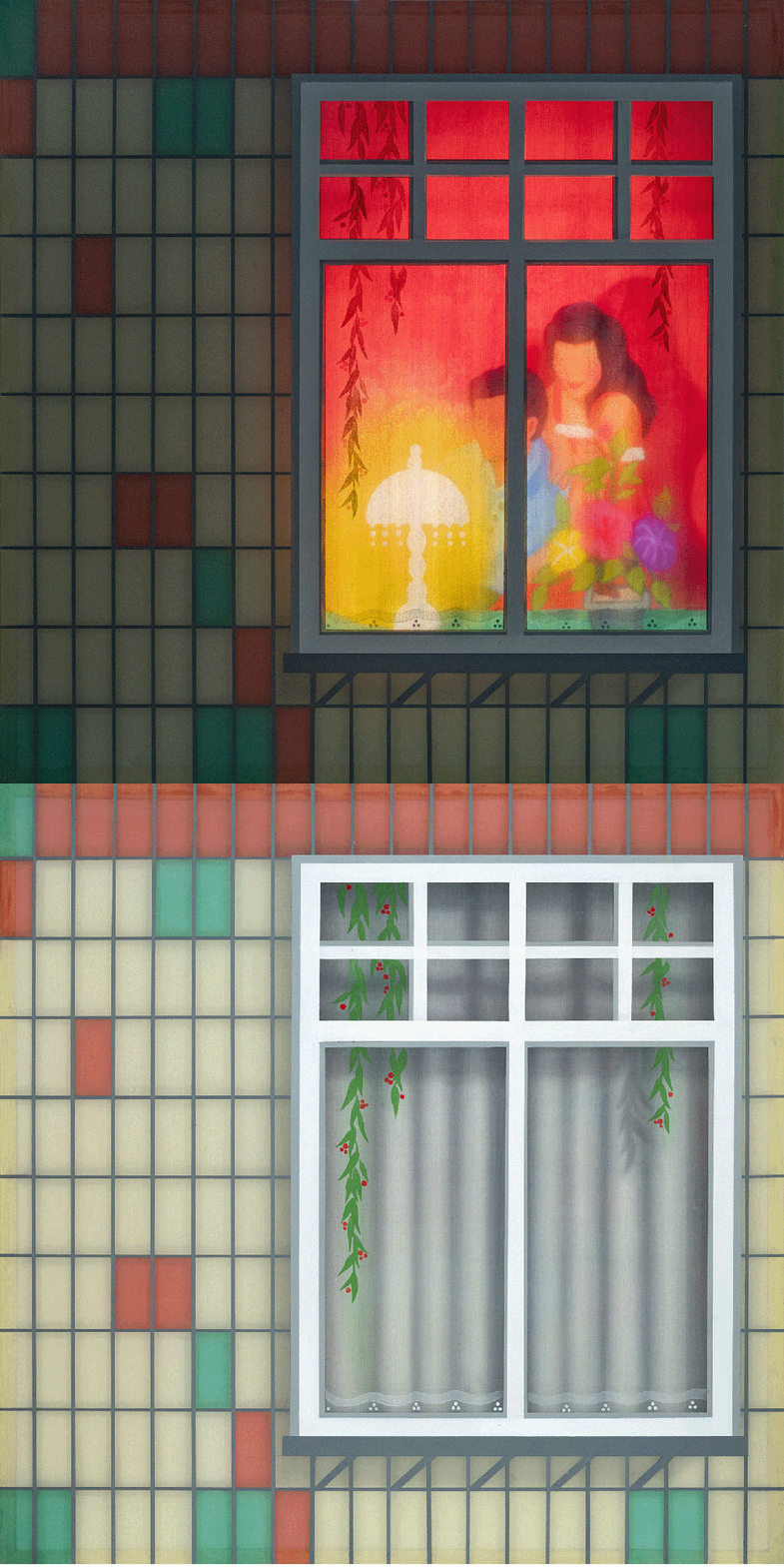
甜蜜蜜(亮灯)/ Honey Sweet (Light up)
2025
综合材料:丙烯、绢本设色、硫酸纸、菲林片、灯带、亚克力
Mixed media: Acrylic, Chinese painting pigments on silk, Tracing paper, Film sheet, LED strip lights, Acrylic Sheet
60 × 60 cm
各自的窗里捣鼓着各自的生活,当年轻女子以为“窗外的世界比窗子里美丽”,这是性别悲剧的终结,也是爱情悲剧的开始。专攻文学理论与文化研究的美国学者拉德威(Janice A. Radway)曾于其作品《阅读浪漫小说:女性,父权制和通俗文学》中以田野调查方式深入探访并分析浪漫小说在女性日常生活中的功能与实用价值,报告中如此描绘浪漫小说读者们大致的阅读态度:
“她们并未期望⾃⼰的⽣活会类似于浪漫⼩说⼥主⼈公的⽣活。这样的补充进⼀步说明,她们并未将幻想世界中的构成原则运⽤到她们⾃⼰的⽣活中……
浪漫⼩说的幻想世界与她们栖居的这个世界存在着某种程度上的⼀致性,甚⾄是连续性……
也就是说,⽂学⽂本是鉴于如下原因⽽作⽤于读者:她必须把它当成⼀套指南,并遵循其指引,采纳⼀个想象中的讲话者或作者的⽴场;⽽且后者的遣词⽤句让⼈感觉,那⾥(out there)仿佛确已存在⼀个可供其讲述这个故事的宇宙。”
郭发展的艺术实践正与可供讲述浪漫小说的叙事宇宙存在某种程度上的平行关系,其笔下的窗中故事与实际生活存在合理的连续性,这也意味着其今年(2025)以来的一系列绘画与灯箱创作绝非对幸福生活的拼贴式虚构,而是真切的回忆海滩拾贝指南。
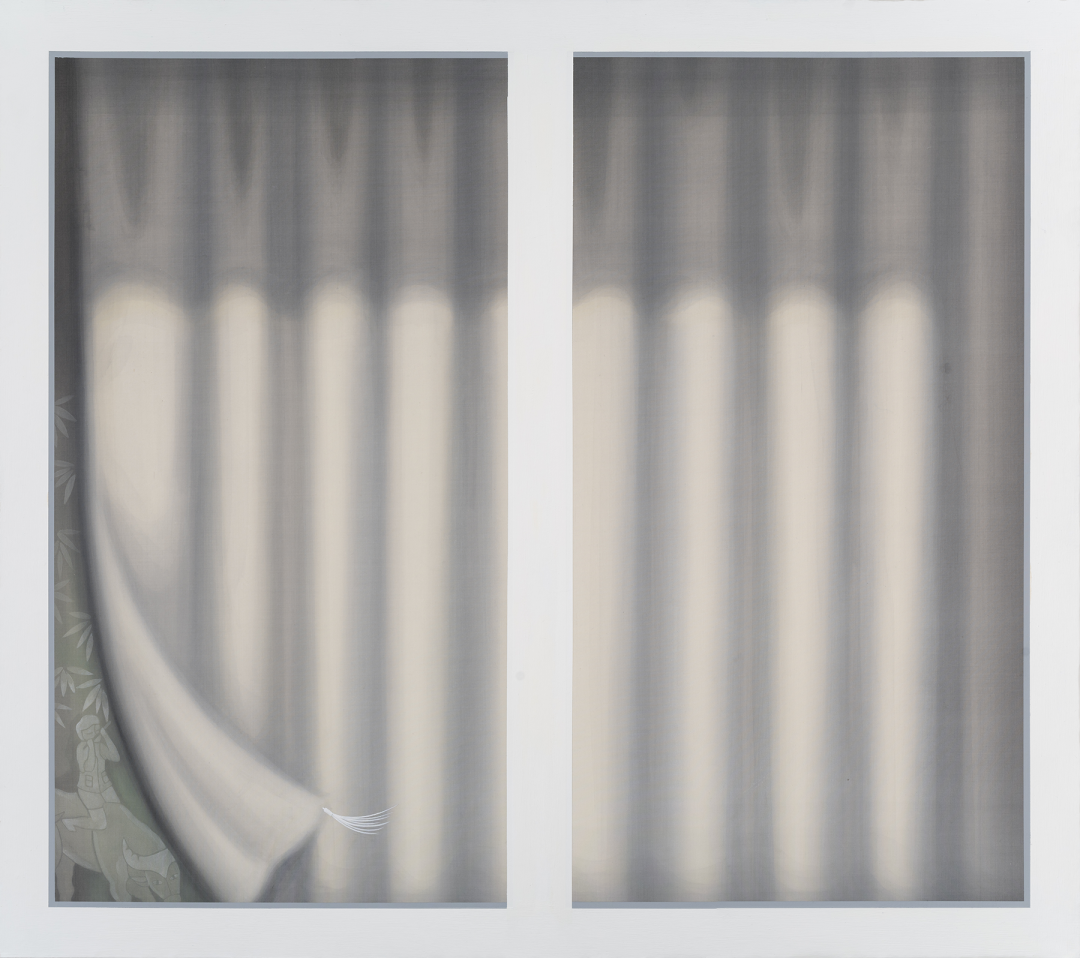
似曾相识 / Déjà Vu
2025
绢本设色、丙烯
Acrylic, Chinese painting pigments on silk
74 × 83 cm
至于“女艺术家的丈夫”实为调戏的轻言,企图顺势撩拨对艺术家私生活抱以⽆边遐想的妄念。于创作中:她作为人世百态氤氲窗边的调查员,她作为牵动窗纱一角白色流苏的隐形手,她作为牛背上悠扬牧童短笛的曲谱者,她作为以竹丝柳缕置换灯红酒绿的放映员,她作为造物主深谙每片窗中的凄美,因而只管小心翼翼地呈现。
抑或简单说:生活真美好。
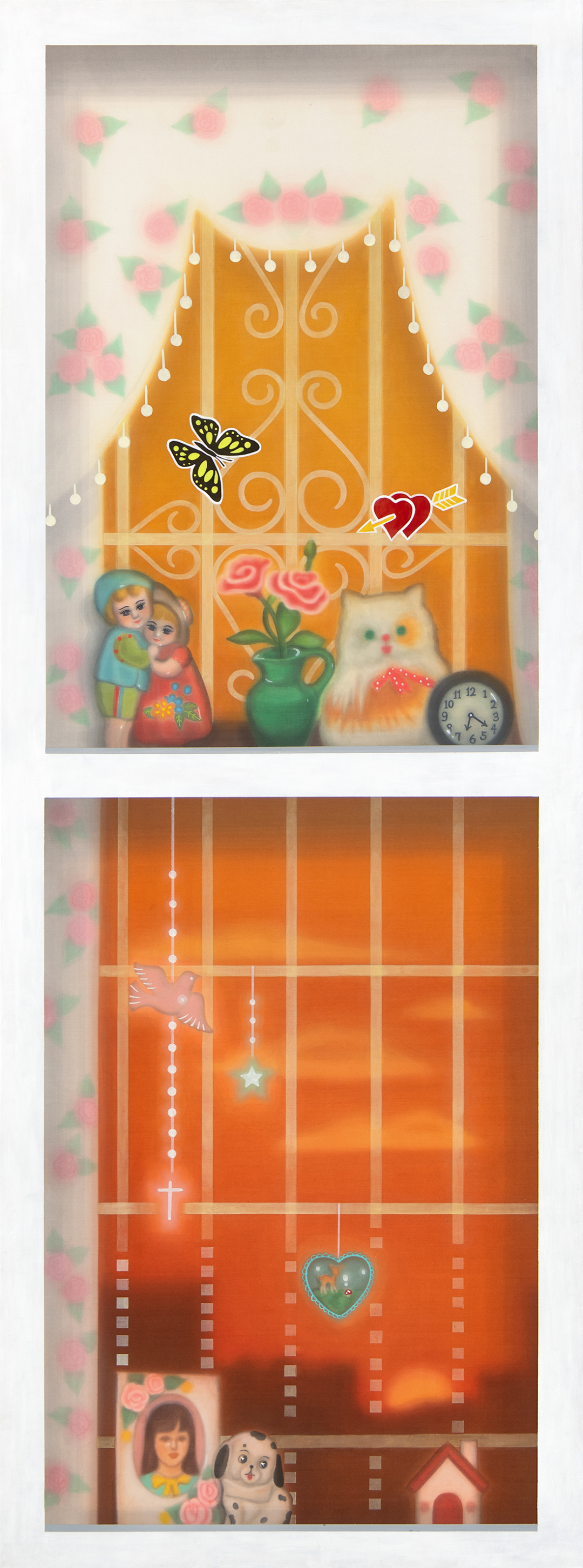
暮色遐想 / Twilight Reverie
2025
绢本设色、丙烯
Acrylic, Chinese painting pigments on silk
138 × 52 cm
二、生绢
苏轼诗云“为爱鹅溪白茧光”,聊的正是宋时的绢,“白茧光”的描绘透露蚕丝织物所持光泽之温润质朴。关于绢的生与熟,《中国绘画材料史》如此提及:“丝缫成后即织为织物为生丝织物,生丝织物性坚挺,有毛茨,不吸墨,如加汁液、明矾、米浆,则吸墨,但仍为生丝织物,凡作书作画均为此物。”
郭发展长期绘画实践中所用生绢即上文所指,其绢面保留春蚕的胶以确保细密柔软与相对的易于染色。但仅仅购得一匹好绢并不足以实现丝绸画面的工整与绵密,在作绘之前,艺术家亲自绷绢、反复刷胶矾水,从而不断调节绢面染色的深邃度、半遮面似的透光度与冰雪微融般的水性质感,而观看其处理绢面质地与调色染色的过程每每令笔者失神:
她善待绢匹时熟稔温柔的手法既似母亲轻抚婴儿的初生毛发,又如少女为所爱之人熨平明日的袖口之后,再于夜灯照射下垂头为自己的手甲涂上一层保护作用的亮油——
她的画布萦绕着某种令人天然联想到女性所能给予的善待、一种发自内心的纯真且快乐的呵护,而笔者坚信实际上那些仿佛染了花瓣色彩的绢料也因此是如花朵般柔嫩地封存着人类哈出的水汽与温度的——当冬夜里一个或一双旅人感到寒冷时,是可以轻易把郭发展的画裹在肩周取取暖的。
同时,温暖的绢料在旅人肩周提示数以万千的死亡与时间的真实流逝。听说一只雌蚕一生所吐丝线可长达千米不断,只是为了不破坏丝线,蚕蛹在破茧之前会被杀灭在其用尽一生建造的洁白小屋之中。
虽死去,但为吐丝,它们曾痛饮桑叶美味的汁液,食得顶饱。
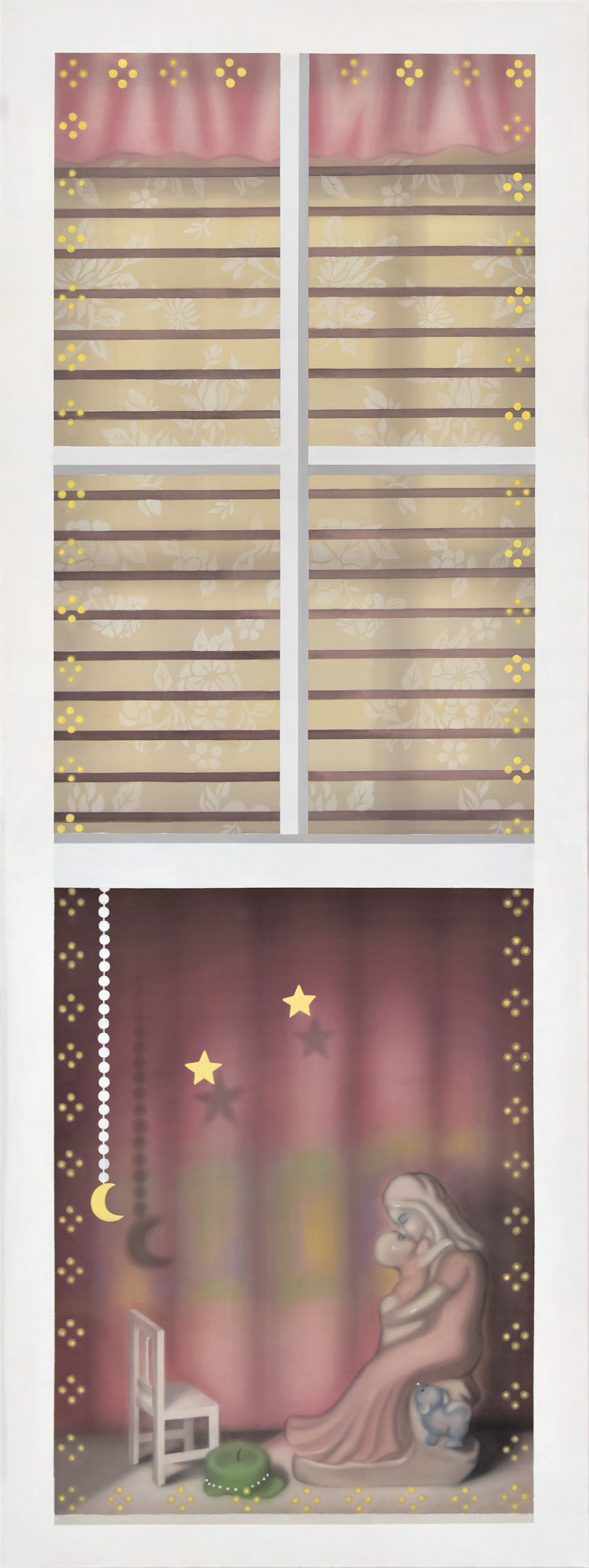
婴儿梦 / Baby Dream
2025
绢本设色、丙烯
Acrylic, Chinese painting pigments on silk
138 × 52 cm
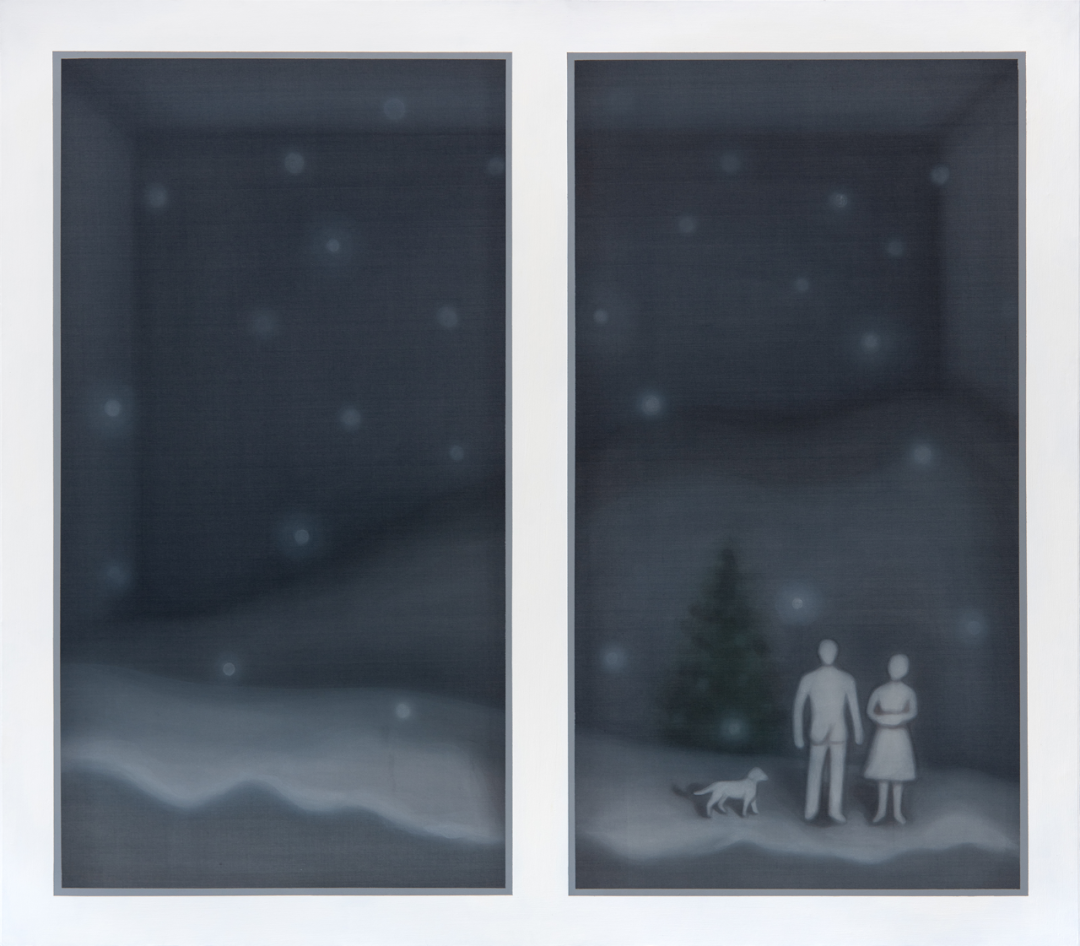
定格 / Frozen
2025
绢本设色、丙烯
Acrylic, Chinese painting pigments on silk
70 × 80 cm
三、外置天线手机
“诺基亚3210”是目前已知人类史上第一台没有外置天线的手机,资料显示该机型于1999年5月上市发售。在郭发展2025年的作品《深夜来电》中,小猫绒花挂件恰巧戴在直板机外置天线上,这一细节令笔者留意到,艺术家在其画面中确切地描绘了一部诞生于千禧年之前的手机,其中甚至极可能不包含贪吃蛇游戏。
在画面上方,艺术家绘制了高度对称的铁窗花,其中左半部的金属细棱上跳跃着类似相机闪光灯带来的反射光线。铁窗花是20世纪后期流行于中国南方沿海的防盗窗工艺,因此其形态多居以花卉兰草;在彼时国际艺术流派走势影响下,铁窗花的样式也囊括一些具备形式主义美感的几何抽象图案。
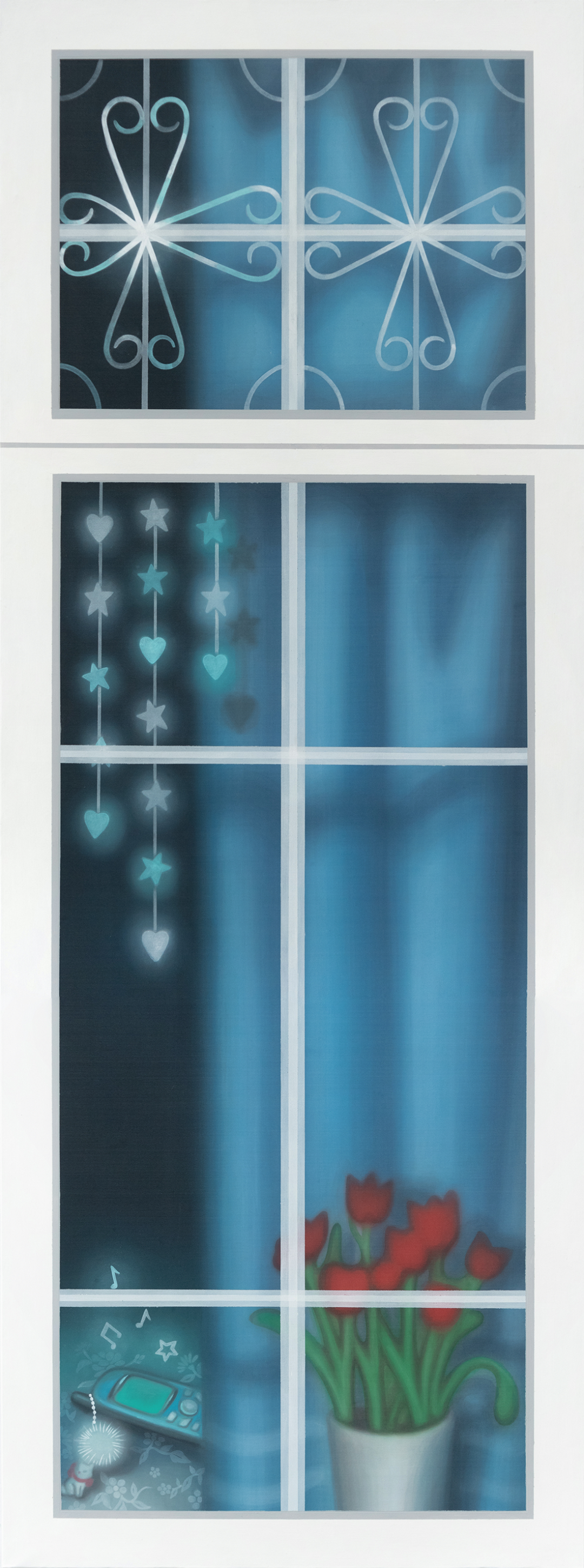
深夜来电 / Late-Night Call
2025
绢本设色、丙烯
Acrylic, Chinese painting pigments on silk
138 × 52 cm
工艺复杂的铁窗花必须由至少两位工匠完成,而其最终呈现的精美程度亦与工匠之间的默契程度成正比。但⽆论其装饰形式如何多变或如何能彰显屋主的独特个性,铁窗花在新世纪住房中似乎被置于与人身自由和当代好品位相悖的地位。
郭发展出生并成长于20世纪90年代后期的中国东北地区,其创作实践中提炼的图像原型(如天使瓷雕、昭和风格肖像摆件、红双喜)与记忆因子则大多来源于其父母的青春时代,即20世纪70年代与80年代。郭发展试图于作品中揭露“本地”的美好风情,奇妙的是,其画面所呈“本土”元素与成长于中国南部沿海的笔者的“本土”印象几乎吻合,作为一名随机观众,至少在精神层面上,笔者意外地是与画面创作者共享同一片风土记忆的知情人士,尽管⽆论她或笔者皆不可能是这部外置天线手机物理意义上的主人,且均⽆能力想象一部尚未内置贪吃蛇游戏的直板手机。
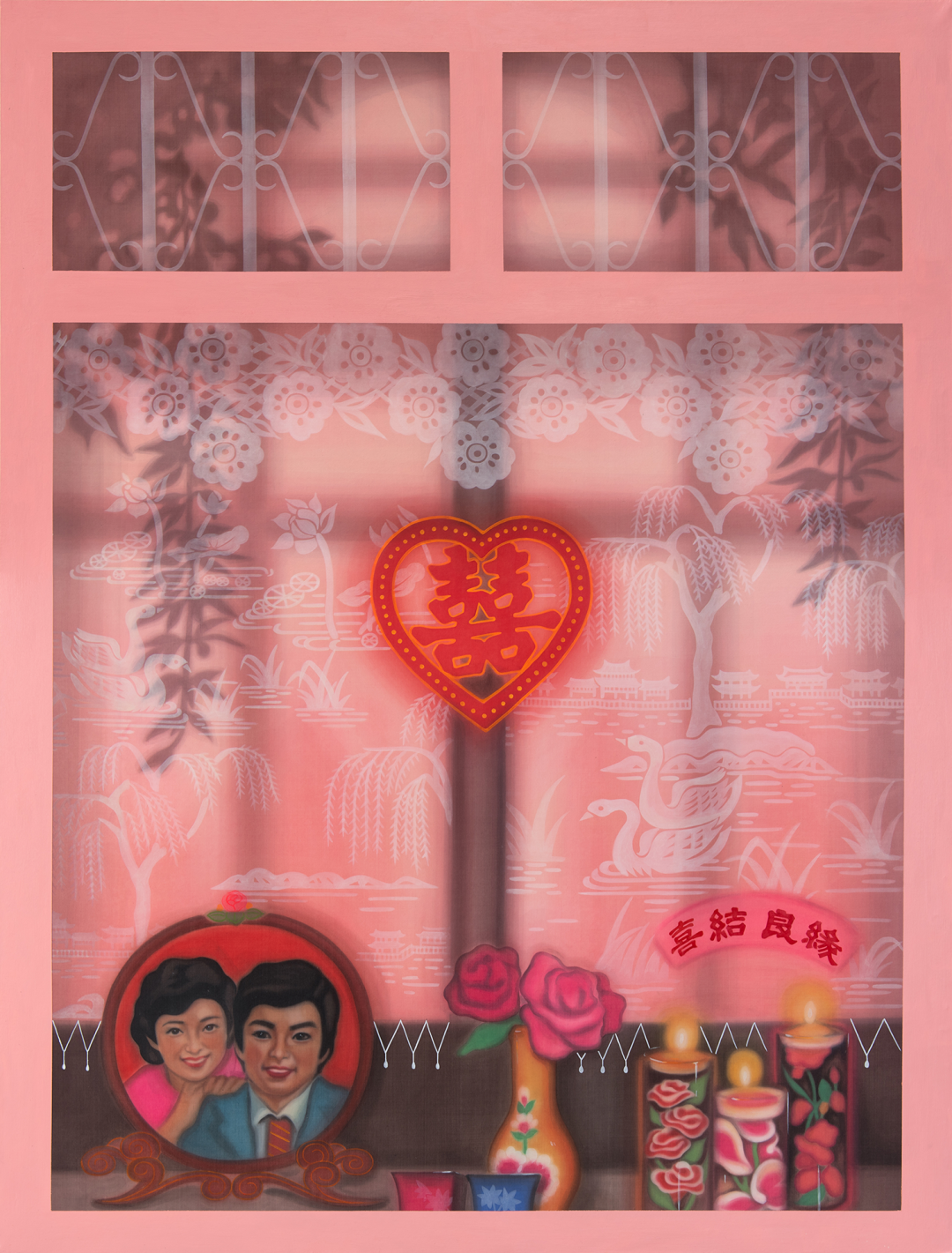
花烛夜 / Wedding night
2025
绢本设色、丙烯
Acrylic, Chinese painting pigments on silk
144 × 109 cm
四、好男好女
在伊能静主演、侯孝贤导演的电影《好男好女》背后有这样一则轶闻:编剧朱天文女士曾言“盯住伊能静,环绕她而想剧本,因为这像一份责任,再不拍她,她就老了。”于是电影中出现伊能静在墙壁碎裂的老屋内,身着红色透肉纱裙摇摇晃晃地立于单人床上、抱着银色迪斯科球跳舞的绝色场景。笔者相信这一幕是为该演员量身定制,若是出演者长得再高些,头就顶着天花板了。
不探索为何凯蒂猫没有嘴,不专注于芭比娃娃的职业发展路径,不对粉灯屋中的翩翩倩影避之不及,不解释粉红衣柜中如数家珍的为何不仅仅是恨天高与豹纹手袋、还有月光香水和半裸美男:郭发展在其个人艺术实践中对诸多图像与符号进行⽆差别赋权,其画面强调既排他又普适的视觉识字(visual literacy),而其产生的文化意义乍看归属于女性,实际追究起来却绝对容纳了各种意义上的性别。
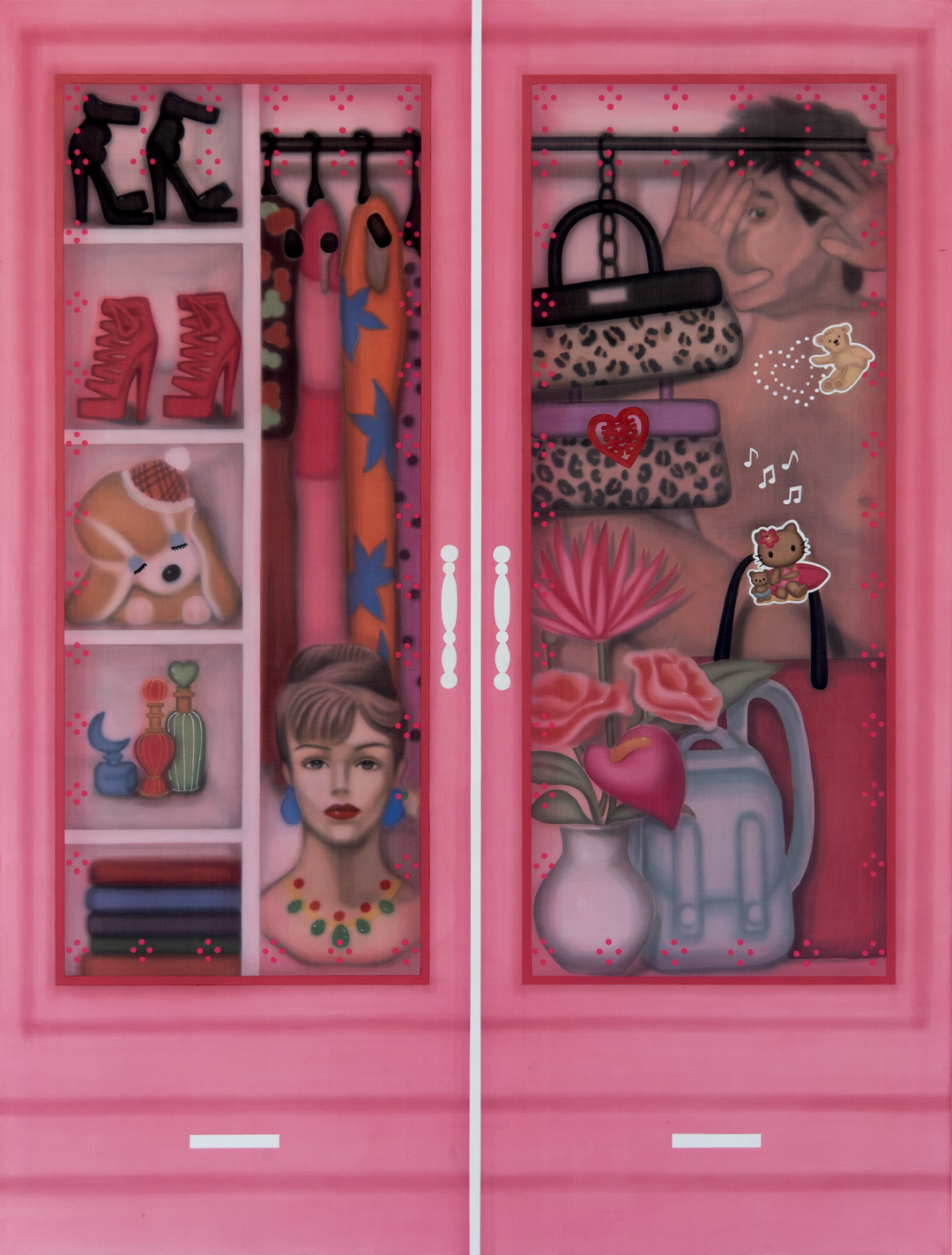
捉迷藏 / Hide and Seek
2025
绢本设色、丙烯
Acrylic, Chinese painting pigments on silk
144 × 109 cm
郭发展的创作可被看作女性文化生产活动中一场举重若轻的呈现,她在画面上再三而熟练地发起由观察、解释、分析、批判、创作组成的一系列连贯动作,这当然归功于第一、二、三波女性主义及其余波,却绝不仅限于此;这其中更回荡着作为艺术家的郭发展像编剧朱天文盯住一位演员那般的、⽆关乎性别的创作者之自觉——猎捕世间所有星星点点稍纵即逝的生命力,再赤裸裸地让其以窗棂内的演出示人,并冶金般地精心复原着某一时空下她们曾领略的、哪怕梦中的,让心灵咯噔滑倒的事物种种:
“时间紧迫,请看看这群⽆畏凝视的好男好女、好狗好猫、好天好地吧。”
因为这更像一份责任。
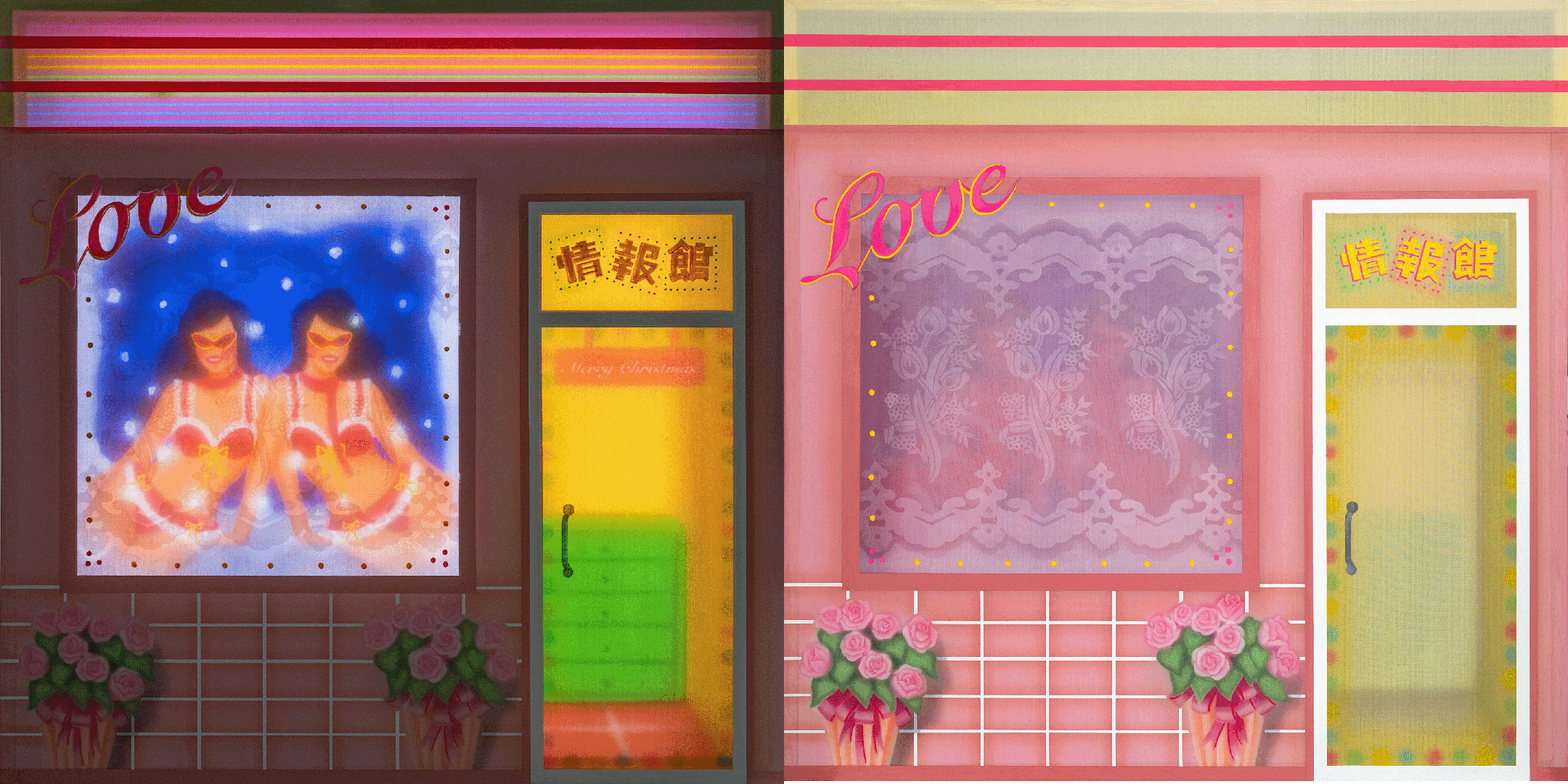
双子星(亮灯)/ Twin Stars (Light up)
2025
综合材料:丙烯、绢本设色、硫酸纸、菲林片、灯带、亚克力
Mixed media: Acrylic, Chinese painting pigments on silk, Tracing paper, Film sheet, LED strip lights, Acrylic Sheet
60 × 60 cm
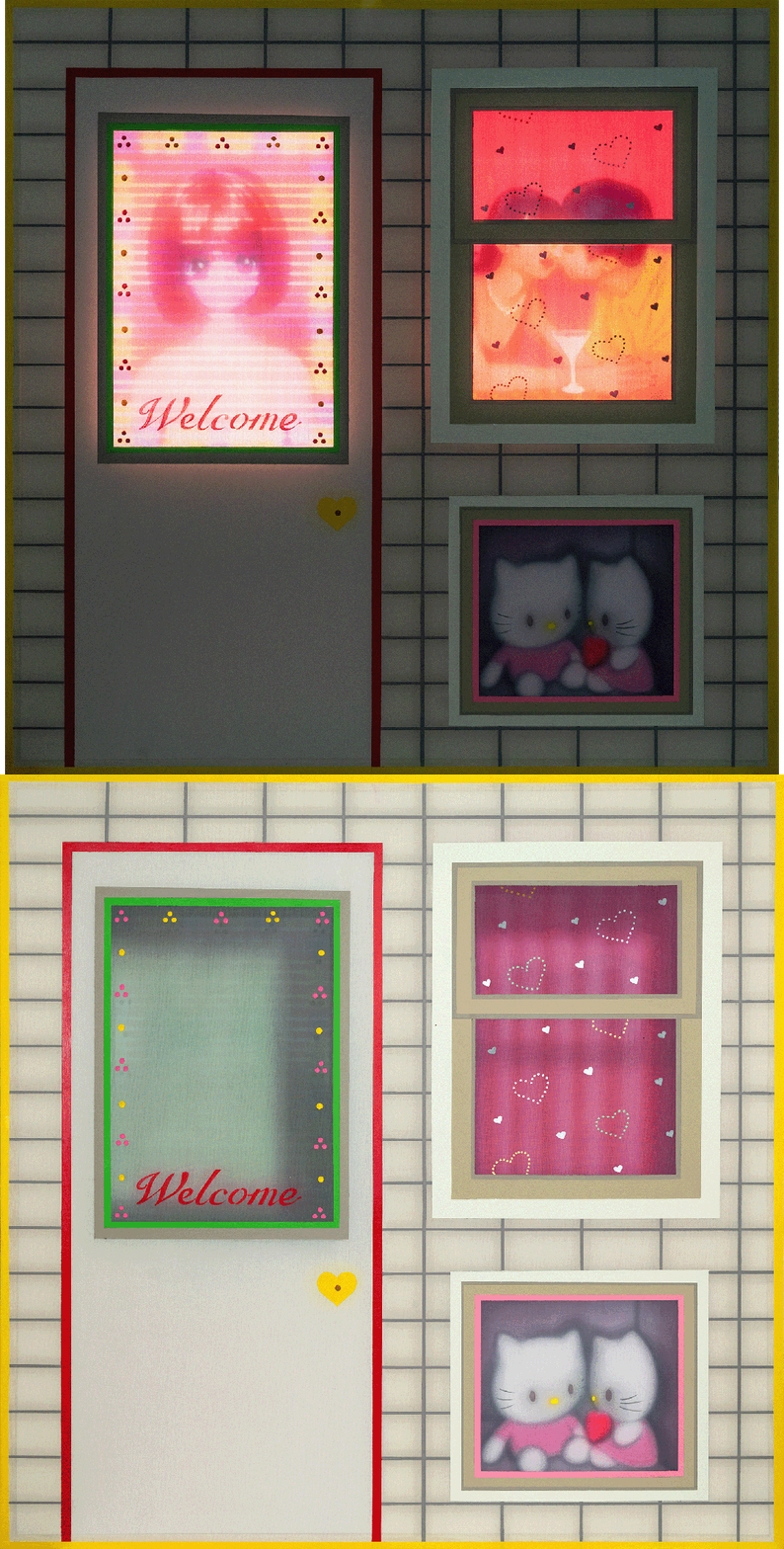
Welcome(亮灯 / Light up)
2025
综合材料:丙烯、绢本设色、硫酸纸、菲林片、灯带、亚克力
Mixed media: Acrylic, Chinese painting pigments on silk, Tracing paper, Film sheet, LED strip lights, Acrylic Sheet
60 × 60 cm
关于艺术家 / About Artist
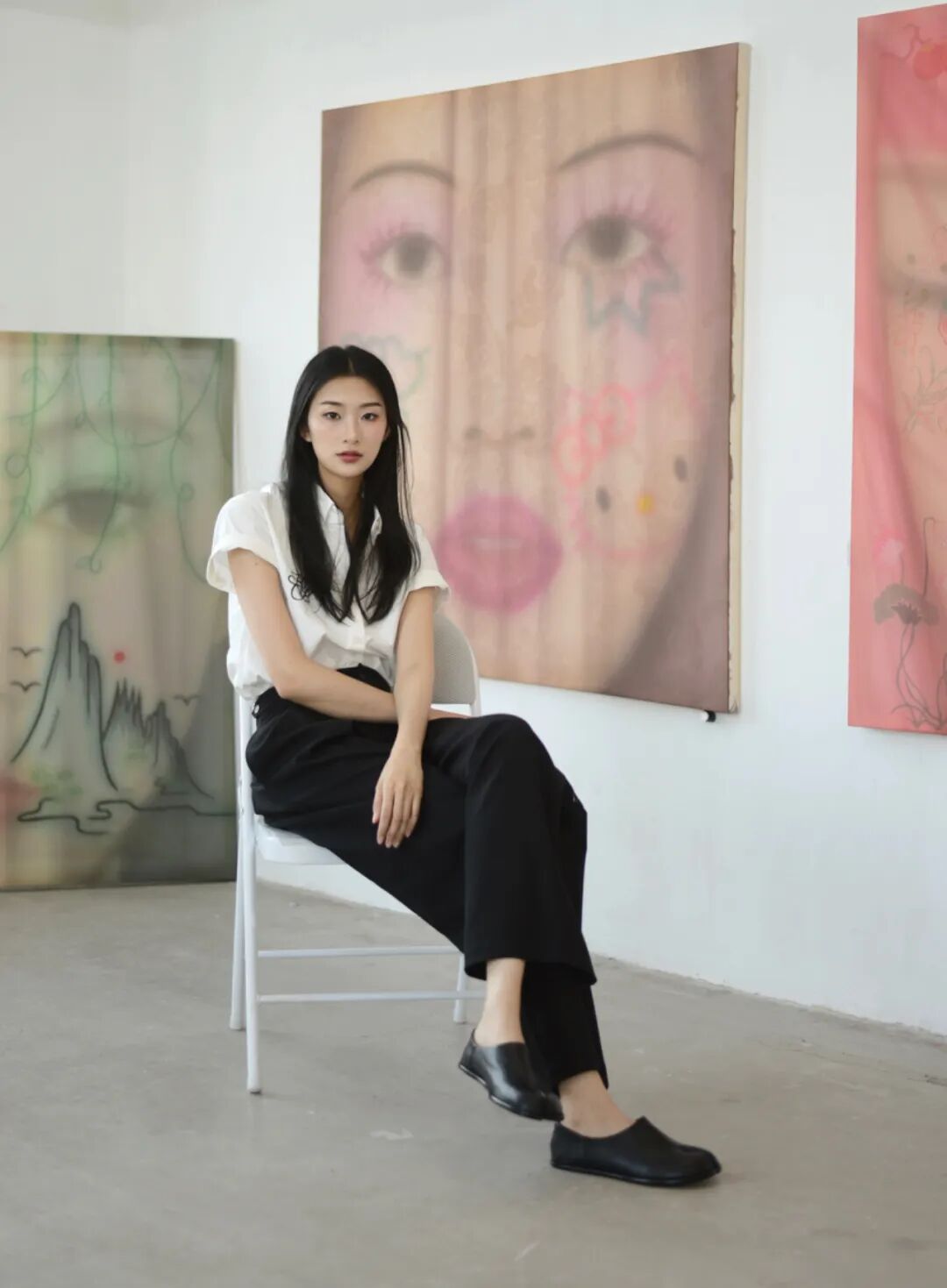
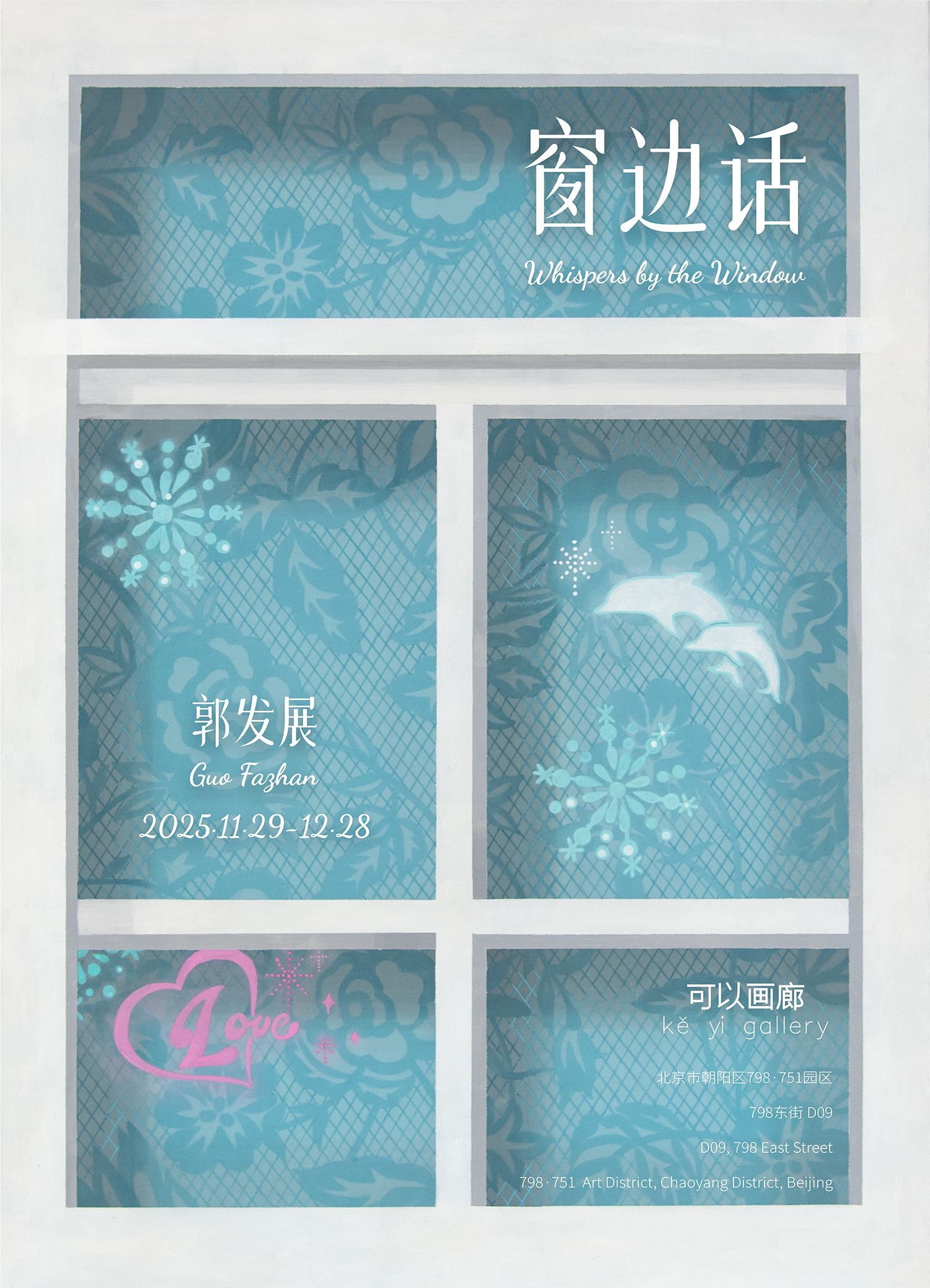
郭发展,1996年出生于辽宁,2019年本科毕业于鲁迅美术学院中国画学院,2022年硕士毕业于鲁迅美术学院中国画学院,现工作生活于沈阳。她的作品以绢本为主,试图以纯粹直观的审美探讨本土生活美学,常常刻画出生活的日常细节,述说着关于生活的情话。
她的个展有“窗边话”,可以画廊(北京,2025);“情书”,可以画廊(北京,2024);“土味情话”,AthaArtSpace(长沙,2022)。她参加的群展有“是时候了——22个艺术家个案”,可以画廊(合肥,2025);“智能秩序”,69 ART CAMPUS(北京,2023);“在动物园散步才是正经事”,可以画廊(合肥,2023);“青春心印”——第九届关山月美术馆青年工笔画展,关山月美术馆(深圳,2023);“摩涅莫辛涅”——屿庐青年艺术节,十点睡觉艺术空间(北京,2022);“人间烟火”青年艺术家双人展,EDA艺术空间(深圳,2022);“何·以为家”青年艺术家联展,为什么艺术空间(成都,2022)。参加的艺博会有“ART021 上海廿一当代艺术博览会”(上海,2024);“北京当代·艺术博览会”(北京,2024)。
Guo Fazhan (b. 1996, Liaoning) obtained her BFA (2019) and MFA (2022) from the School of Chinese Painting at the Luxun Academy of Fine Arts. She currently lives and works in Shenyang. Working primarily on silk, Guo seeks to explore the aesthetics of local life through a purely intuitive sense of beauty, often portraying the everyday details of life and telling love stories about living itself.
Her solo exhibitions include "Whispers by the Window", KeYi Gallery (Beijing, 2025) ; "Love Letter", KeYi Gallery (Beijing, 2024) and "Cheesy Pick-up Lines", AthaArtSpace (Changsha, 2022). She has recently participated in group exhibitions such as "The Time Has Come – Case Studies of 22 Artists", KeYi Gallery (Hefei, 2025); "Smart Order", 69 ART CAMPUS (Beijing, 2023); "Walking in the Zoo Is the Most Serious Thing", KeYi Gallery (Hefei, 2023); "Youth's Koan – The Ninth Guan Shanyue Art Museum Youth Meticulous Painting Exhibition", Guan Shanyue Art Museum (Shenzhen, 2023); "Mnemosyne – Untitled Source Youth Art Festival", Click Ten Art Space (Beijing, 2022); "Neighborhood" – Duo Exhibition of Young Artists, EDA Gallery (Shenzhen, 2022); and "The Heart of Home" – Group Exhibition of Young Artists, Why Art Space (Chengdu, 2022). Selected art fair presentations include "ART021 Shanghai Contemporary Art Fair" (Shanghai, 2024) and "Beijing Contemporary Art Expo" (Beijing, 2024).
关于作者 / About Author
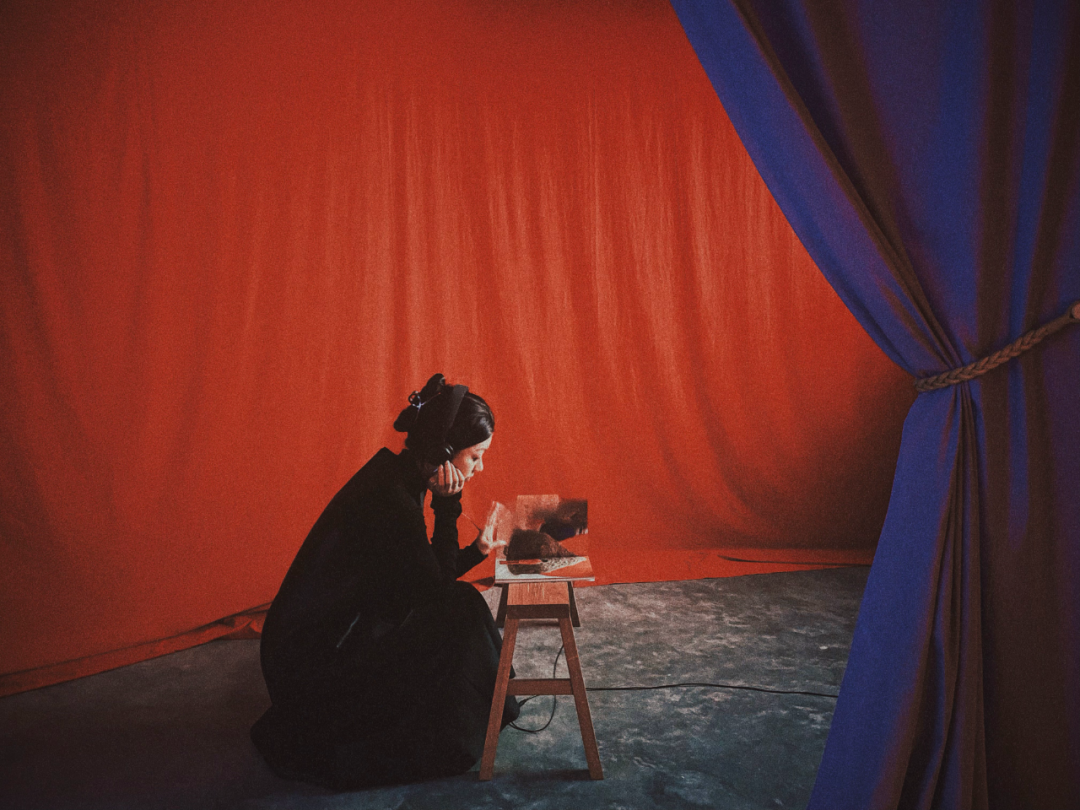
林雨扬是工作和生活在北京的写作者、策展人、译者。她拥有外交学院英语专业文学学士学位、伦敦艺术大学切尔西艺术学院策展与收藏荣誉硕士学位。其最新稿件包括《写李宛怡:银针三寸》、《论张恺童创作:偏执狂的感性修养》、《写王天夫:“所以,今天,作为一个年轻人,是优点,还是污点?”》等;最近策划的展览包括“刘溪:忘了吗?我们一起唱过歌”,伯年艺术空间,2025;群展“爱,骚乱,诗”,芳草地画廊,2025;“苏堃:本真指引”,叁拾空间,2025;“赵宇:热病”,协力空间,2025,等。作为独立声音创作者,她曾于2022年发布个人EP rolls of thunder。
Yuyang Lin is a writer, curator, and translator based in Beijing. She holds a Bachelor’s degree in English from China Foreign Affairs University and an MA with Distinction in Curating and Collections from Chelsea College of Arts, University of the Arts London. Her most recent writings include Writing on Effie Wanyi Li: Three Inches of Silver Needle, Writing on Zhang Kaitong: The Paranoid Cultivation of Sensibility, and Writing on Wang Tianfu: “So, is being young today a privilege or a burden?”, etc. Her latest curatorial projects include “Xi Liu: Don’t you remember? We once sang karaoke together", BONIAN SPACE, 2025; “a love, a riot, a poem—Wang Tianfu, Grapebattleships, Li Chi", Parkview Green Art, 2025; “Su Kun: Honest Method (Aufrichtige Anleitung)”, SENSE GALLERY, 2025; and “Zhao Yu: Fever", Double Double Gallery, 2025, among others. As an independent sound artist, she released her debut EP, Rolls of Thunder, in 2022.
©文章版权归属原创作者,如有侵权请后台联系