本帖为中英双语,英文版本位于中文版本下方。
This post is written in both Chinese and English.Please scroll down for the English version
关于《我们,世界》|About We, the World
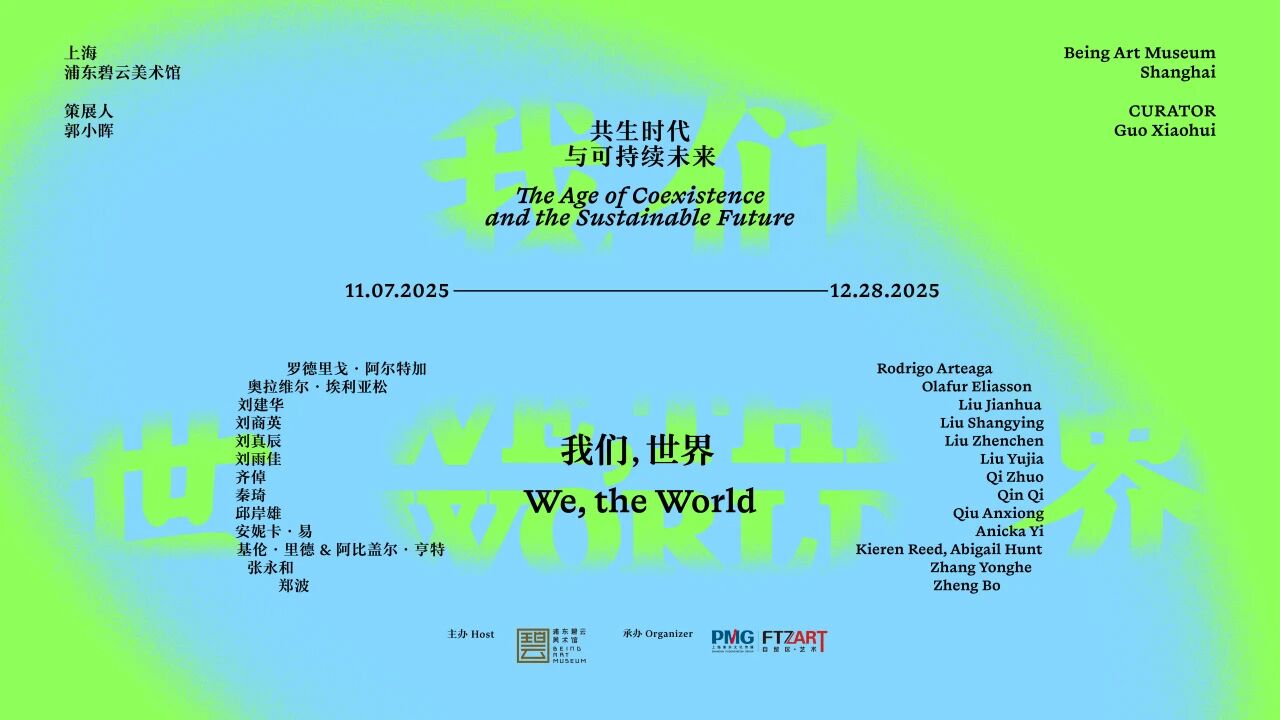
“我们”和“世界”——这两个看似基础的词语,在今日的地球历史时刻中,正在经历意义的重组。展览《我们,世界》将这两个词并置,不仅是为了提出一个美学上的提问:“当代,我们与世界的关系究竟是什么?”本次展览汇聚来自不同文化背景的国内外艺术家,他们通过装置、影像、绘画、AI科技等多元媒介,构建出一个跨越物种与感知的“共生现场”。
“We” and “the world” — two seemingly simple words that are undergoing a profound reconfiguration in meaning at this critical moment of planetary history. In the exhibition "We", "the World", these two words are brought together not merely to pose an aesthetic question — What, in our contemporary condition, is the nature of our relationship with the world? This exhibition brings together artists from both domestic and international backgrounds with diverse cultural backgrounds. Through various media such as installations, videos, paintings, and AI technology, they have created a "symbiotic scene" that transcends species and perception.
参展艺术家|刘商英 Liu Shangying
刘商英,1974 年生于昆明,现为中央美术学院油画系教授,生活工作于北京。自 2011 年以来,他多次深入西藏阿里、内蒙古额济纳旗、新疆罗布泊等地开展野外创作,探索绘画与自然之间的精神共振。他以身体为媒介,以绘画为行动,将创作转化为一次感知与自然能量的互动过程。刘商英的作品介于地质、时间与情感的交汇处,呈现出绘画作为“与世界共生的语言”的潜能。
Born in 1974 in Kunming, Liu Shangying is a professor at the Central Academy of Fine Arts in Beijing. Since 2011, he has carried out plein-air painting projects in remote regions such as Tibet’s Ngari, Inner Mongolia’s Ejin Banner, and Lop Nur in Xinjiang, exploring spiritual resonance between painting and nature. Using the body as a medium and painting as an act, Liu transforms creation into an encounter of perception and energy. His work lies at the intersection of geology, time, and emotion, revealing painting’s potential as a language of coexistence with the world.
作品介绍 | About the Artwork
《荒原计划20号》是刘商英在新疆罗布泊完成的巨幅绘画,也是其“荒原计划”中的最终篇章。艺术家将近 38米的画布铺展在雅丹地貌的起伏地表,以手代笔、以触觉为媒,与大地直接交流。那些在风与沙中留下的色彩痕迹,记录了人与自然最原始的接触。绘画在此成为身体、时间与地表共同生成的记录,一次关于感知自由与自然共鸣的实验。刘商英展出了布面油画《荒原计划20号》以及其在创作“荒原计划”时拍摄的高清视频。刘商英希望通过两件参展作品向观众分享他在罗布泊在绝望之中创作时感受到的一种来自于大自然的神秘感与惊喜感。刘商英还希望用他的创作经历鼓励大家多到自然中寻找到我们内心能与世界触碰的一个点,重新建立自己与自然之间的连接。
Wilderness Project No. 20, created in Lop Nur, Xinjiang, is the culmination of Liu’s “Wilderness Project.”Spreading nearly 38 meters of canvas across the undulating yardangs, Liu paints with his hands, allowing touch to guide his dialogue with the earth.The traces left by sand and pigment capture a primal contact between human and nature — a tactile experiment in freedom, perception, and resonance.
《荒原计划20号》,布面油画,320*1730cm, 2019
Wilderness ProjectNo.20, Oil on Canvas, 320*1730cm, 2019
《荒原计划》,高清视频,46分56秒, 2019-2021
Wilderness Project, HD video, 46'56", 2019-2021
对话刘商英|Q&A
01. 作品与创作动机 / Conceptual Origin
Q: 这次参展的作品最初是如何产生的?创作之初,你试图回应一个怎样的提问或感受?
How did this work first come into being? What question or feeling were you responding to at the beginning of the creation?
刘(Liu):这件作品是在寒冬下的荒原工作生活了20天后产生的,至今我都感觉不真实。它看上去是偶然的,但却是身心经历后的本能外溢,一种命运的使然。我并没有想回应什么问题,在那种严苛的野外生存环境中,艺术是多余的,肉身和基本的意识被逼到了角落,而最终我通过我自己都意想不到的方式完成了这件作品,并与自然达成了某种和解。
This work was created after 20 days of working and living in the wilderness during an extremely cold winter. To this day, I still feel the experience is unreal. It seems accidental, but it is an instinctive overflow after physical and mental experiences, a result of fate. I never thought of responding to any questions. In that harsh wilderness-survival environment, art was superfluous, and the physical body and basic consciousness were pushed to the margins. Eventually, I completed this work in a way that I myself never expected and reached a certain reconciliation with nature.
02. 与展览主题的关联 / Relation to the Exhibition
Q: 《我们,世界 / We, the World》强调的是跨物种、跨技术、跨生态系统的共在(coexistence)。你认为你的作品与“共在性”之间有怎样的对话?
We, the World emphasizes coexistence across species, technologies, and ecosystems. In your view, how does your work engage with this idea of “coexistence”?
刘(Liu):主体的感知在身体力行中与环境会自然地对话,它并不确定,也并不会有定论式的结果,预设没什么用,方式不是问题,我理解身在其中就是“共在”,不一定非要做什么。
The perception of the subject will naturally engage in dialogue with the environment through physical action. It is uncertain and has no definite outcome. Presupposition is of no use; the way is not the issue. I understand that being in it means "co-presence", and it is not necessary to do something.
03. 材料、技术与方法 / Materials & Processes
Q: 你使用了哪些关键材料、技术或方法?这些媒介选择如何帮助你表达作品的核心思想?
What key materials, techniques, or methods do you employ? How do these choices support the core ideas of your work?
刘(Liu):最后一块儿不知道该怎么用的大画布,不想再画了,铺在雅丹上,突然想去摸,用手蘸了褐色颜料,隔着布开始抚摸地貌,触觉的感知很奇特,非常直接,之前的撕扯感没了,像一种简单的游戏,让我聚精会神,同时也产生了很具体的敬畏感,当时的一切都来的自然而然。
I didn't know how to paint the last large canvas, I didn't want to paint it anymore. I laid it on the Yardang landscape. Suddenly, I wanted to touch it. I dipped my hand in the brown paint and started to touch the landscape through the cloth. The tactile perception was very peculiar and very direct. The previous tearing sensation was gone. It was like a simple game, which made me concentrate and also generated a very concrete sense of awe. Everything at that time came naturally.
04. 感知与观众体验 / Sensory & Audience Experience
Q: 你希望观众在面对这件作品时,获得怎样的体验?是感知性的、情绪性的,还是认知上的?
What kind of experience do you hope the audience will have when encountering this work—sensory, emotional, or cognitive?
刘(Liu):都可以。
I want the audience to freely define their own experience.
05. 生态、未来与世界观 / Ecology & Worldview
Q: 在当下复杂的全球生态、科技与政治语境中,你如何理解艺术的角色?你的作品又如何参与这种持续的讨论?
In today’s complex ecological, technological, and geopolitical context, how do you understand the role of art? How does your work participate in this ongoing conversation?
刘(Liu):艺术应该具备某种通感,因此我喜欢原始艺术。所有的问题始终都在那,我们一直在面对,人类最早的艺术就是顶峰,即便生活在洞穴里,而我只不过生活在21世纪一个科技更发达的“洞穴”里,那些基本问题从未穷尽过。
Art should possess a certain synesthesia. I like primitive art. All the problems have always been there, and we have been facing them all along. The earliest art of mankind is at its peak. Even if we live in a cave, I am merely living in a more technologically advanced "cave" in the 21st century. Those fundamental problems have never been exhausted.
06. 下一步或长期方向/ Future Practice
Q: 最近你正在着手哪些新的研究或创作方向?它们是否与本次展览的主题形成延伸或回应?
What new directions or research are you currently exploring? Do they extend or respond to the themes of this exhibition?
刘(Liu):没有具体的计划,走一步看一步,我希望能一直行走,与自然保持联系,这能让我安静下来并感到清醒。
There is no specific plan. I just take it one step at a time. I hope to keep on traveling and stay in touch with nature. This can calm me down and clears my brain.
©文章版权归属原创作者,如有侵权请后台联系